
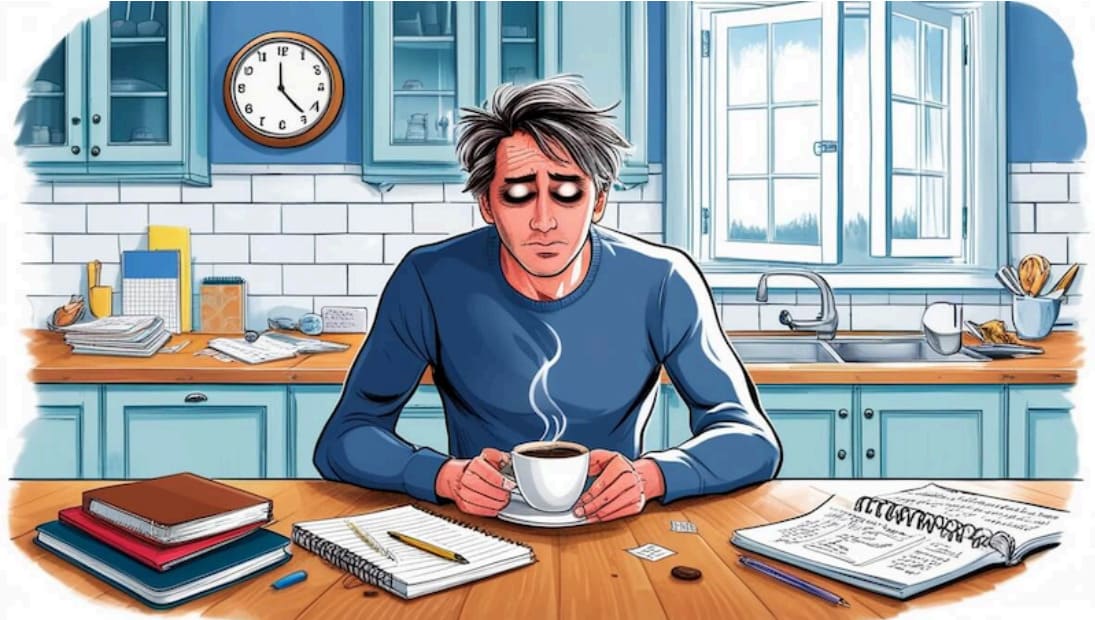
In this chapter we'll talk about when to get up, why some like to rise at dawn and others to sleep till noon, and look at what's right and what's myth. Let's get started.
«The early bird catches the worm.» Everyone's heard it. The problem is that saying is wrong at heart. I'd even say «the early bird is tired by lunch» is closer to the truth. I've heard all sorts of odd claims about why you must get up early and what it will change. Sleep often goes together with daily routine, and you'll hear that you mustn't eat after 6 p.m. I heard exactly that in an online video from some professor (or maybe just a researcher or teacher), about 70, who brought in melatonin and cortisol, which his grandfather in turn tied to food. I've nothing against melatonin or cortisol, and technically he was correct. The only problem is that his confident line — no food after 18:00 and you must be in bed by 23:00 — came straight from his own experience. His metabolism isn't what it was when he was young. Yes, by 23:00 he's very tired and ready to sleep. But what about healthy 30–40-year-old men, especially with a fast metabolism, who still want to eat between 18:00 and 23:00? Maybe more than once, and without meat? I don't think he thought about that; his body doesn't have that problem anymore. So there are people, me included, who if they eat at 6 p.m. will be very hungry by 10–11, and sleep won't come on an empty, rumbling stomach.
Back to you, early birds. When I was at college and commuting from the suburbs by train, I got up around 5:40 for four years. In my final year I had a five-day week instead of six, and placements I didn't always have to travel to, plus a driving licence so I could get up at 7 and drive my father's car. If we leave the last year aside, that's still three awful years when I got up very early almost every day except Sunday. Even in spring and summer it wasn't much easier, though the days were long and it was usually light when I rose. I won't dwell on how hard it was in winter and autumn when the day was shortest. Do you think that gave me a habit of getting up early in later years instead of sleeping till 10–11? No. Early rising has always been and still is torture for me. So to all my relatives and acquaintances who joked in my childhood that I needed the army to fix my routine (in their view a normal wake-up is around 6 a.m.), I can say that after I "served" 2–3 times at college I came away with nothing but stress and accumulated fatigue — no habit. My productivity early in the morning is no higher than late at night, even though my head should be rested after sleep. But the problem is that at that time a lot of energy goes into fighting sleep. So I decided never to torture myself. Of course you need a routine, but if your body has chosen to wake on its own at 9–10 rather than 4–5, then if you can, don't fight it.
In this book I give a big role to habits and how important it is to build them. Some even quote numbers — 30 or 40 days to form a habit. But for me early rising and accordingly earlier bedtimes than my current routine didn't work, and the habit never formed — not in 30 days, not in 40, not even in 3–4 years. Why I in particular couldn't acquire it I don't know; I suspect it's to do with my body and with my age — I was about 20 then. We'll talk about age a bit later.
If my experience doesn't convince you, there's the author of "My Productive Year", Chris Bailey. He too ran experiments on himself — only his were voluntary. In the book he describes well what time he tried to get up, how long he tried to build the habit, and that in the end none of it worked.
Among my acquaintances and even close relatives I have plenty of early birds who get up around 6. But those same people, once it's dark, are walking around like sleepwalkers within an hour or two and often go to bed by 10. Did they do more useful or good things in the day that they could boast about to night owls? No. Roughly the same amount of work, if not less. Are they healthier because they get more melatonin? No, if anything the opposite.
There's one more thing about early birds and owls that I have to say and that almost nobody says or notices. Everyone becomes more of an early bird with age. Maybe not super-early, but over the years a late schedule shifts earlier. I've seen it in myself and in people I know. You don't need reminding that children and teenagers like to stay up till 2–3 a.m. and sleep till 12–1 p.m. Meanwhile adults and older people often like to go to bed by 11 and get up at 6–7. And it's from adults that we hear "don't stay up late" and criticism of teenagers and children. The older the person, the more they criticise. Why do adults and especially pensioners do that? There are probably at least two reasons. First — their childhood. No gadgets or books, filled with household chores. Maybe their grandparents didn't even have electricity, so there was no choice about when to sleep: dark — go to bed; sun up — get up and work. The second reason I've partly given already. With age people can shift from owl to early bird — from changes inside the body or from other factors, e.g. a baby in the family who wakes at all hours. So by evening they're exhausted and happy to go to bed at 10 or 11. For older people these two reasons override everything else and shape the experience they're eager to pass on to the young.
To sum up: don't remake yourself from owl to early bird or the other way round. Choose the sleep and wake pattern that lets you work most comfortably and productively. This applies first to those who can choose and don't have to get up early for work. But in any case remember: forcing your schedule to match some imagined norm of older generations may not add productivity or energy — it may take them away. No 30 or 40 days of early rising will make you more productive, and you probably won't acquire the habit. And there's no real need. The day still has 24 hours. An early bird who gets up early and goes to bed early does about the same amount of "important" work as an owl, only shifted to the first half of the day. This chapter isn't a green light for owls to work all night and sleep all day — that won't do you or your body any good. Just find the right balance of sleep and wakefulness for you and stick to it.
