
Very often tasks arise that you don't feel like doing. They're important, they need to be done, but there's simply no desire. Putting things off, as we'll see below, is called procrastination, and in the relevant section we'll look in detail at why people put things off until later.
It's hard to tackle "awkward" tasks that you've set yourself. But it's even harder to do "awkward" tasks that someone else sets for you. This might be an unpleasant assignment at work or a request from friends or relatives. Of course, you can always recall the advice of "coaches" that in life you should only do what you enjoy. But that's not the wisest advice, and in the section on the importance of routine you'll understand why.
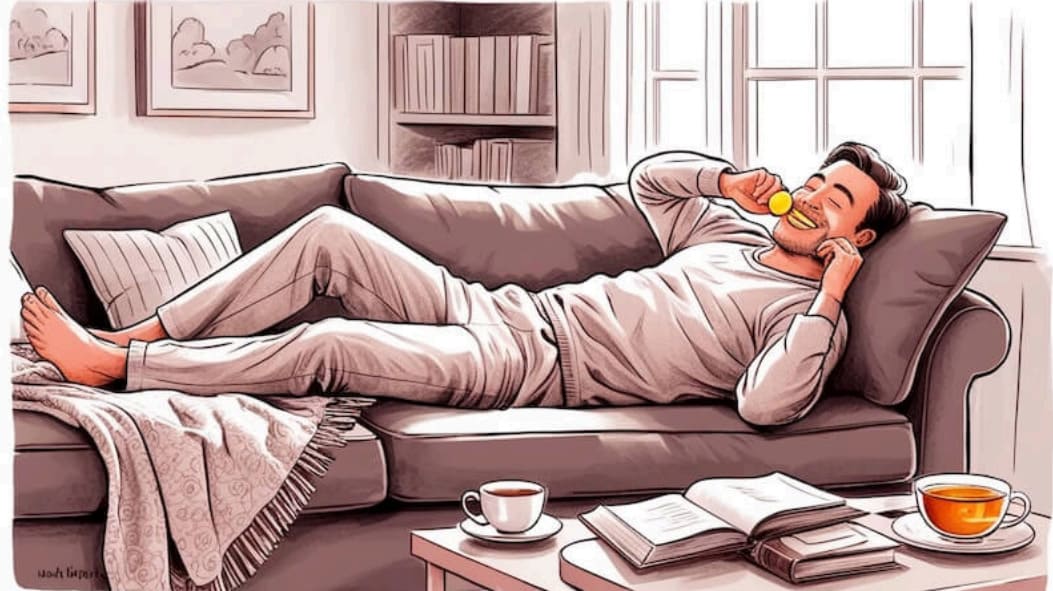
So, our lives are surrounded by tasks we don't want to do, but they still demand our attention! How to deal with such situations? You need to praise yourself for doing these tasks! No, I don't mean that you should say: "What a good boy/girl I am". By praise I mean giving yourself something special that you wouldn't normally allow yourself.
Do you think I have any desire to go for a run at −10°C in February along snowy, dark and gloomy streets, putting on several layers of clothes — from a vest to a jacket, wrapping myself in a scarf, taking gloves and a hat? And so for the last 5–6 years. Of course not! But I still don't give it up and go for a run every time, whatever the weather. After the run I treat myself by not taking any work tasks. That evening is completely free for me — no obligations. I can watch funny videos or a film. (Don't think I don't watch films or videos on other days. I'll talk about that below in the section on idleness). Though sometimes it happens that I don't get tired on the run, and overall my mood for the run wasn't so bad that I can do something useful afterwards.
Another type of task I don't particularly like but consider extremely important is "going through links". During weekly podcasts links to articles and publications are collected that are important to me from the point of view of career growth and improving my professional skills. The problem is that I don't like reading these articles, as they require, albeit short, deep concentration. Sometimes the same happens with books: for example, I'm reading a book that's hard to understand and I realise that by reading it I'll get something important from it. In such cases I sometimes treat myself to a phone game: read one article — play one level, read a second — another level. This approach, where I alternate difficult tasks with rewards, lets me do tasks I don't feel like doing.
James Clear also wrote about the importance of praise in his book "Atomic Habits. How to Build Good Habits and Break Bad Ones", which we're already familiar with from the section on habits. Don't underestimate praise, but don't overuse it either. First of all, don't fool yourself: getting through 20 levels of a game in exchange for 5 pages of a book — that's still not an equal exchange. Remember that above all you're doing important tasks, not just playing games.
If you feel you have tasks you don't want to do, try applying the praise system. Almost everyone has something from distracting and harmful habits that's hard to resist: for some it's series, for others — social networks, for others — watching football matches or other sports, and for others — games. Reward and treat yourself with praise right after doing "awkward" tasks. If there are several such tasks, alternate them with rewards.
