
In the first chapters of the book we established that human life is very short, and that work and sleep take up a lot of your time. You must use your remaining ⅓ of time as rationally as possible.
As you go about your tasks you often run into repetitive work. Moreover, in pursuing your goals you're also likely doing some routine, recurring work.
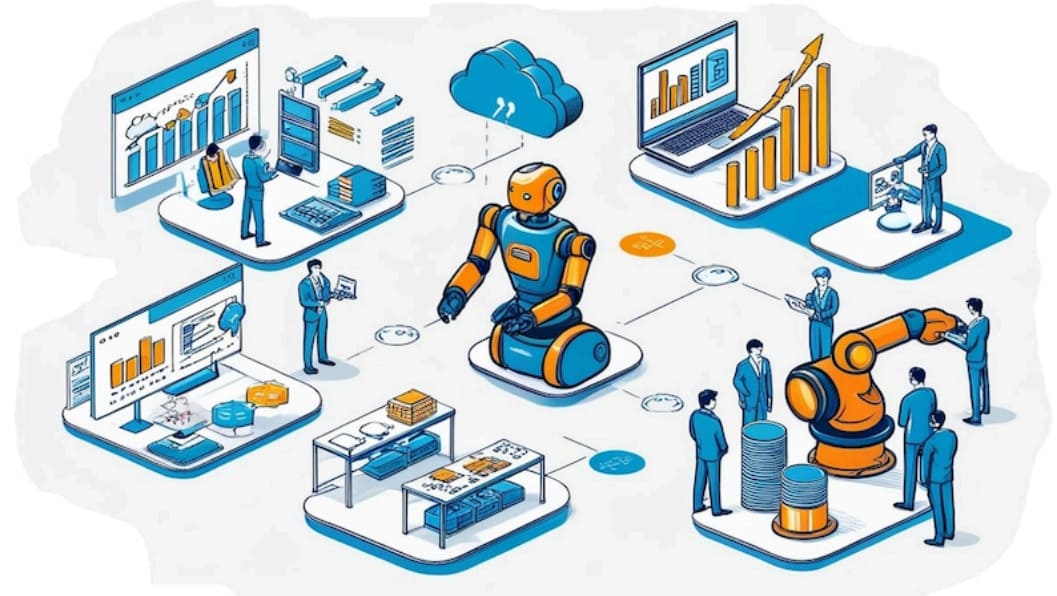
Your task is to try to optimize, or better yet — automate the execution of some recurring operations and tasks that take up time you could spend on something more important. These can be both household chores and some tasks related to achieving your goals. I'll even have a separate chapter on household chores.
For example, if you like a tidy home and constantly vacuum, buy a robot vacuum that you can start via a mobile app and that cleans the floor no worse than a regular one. You probably don't live in a smart home, say one whose fridge can order groceries on its own, but such an option theoretically exists, and not just that one — many others too. If you spend too much time on trips to the store, consider online food delivery. Of course, for free delivery you'll need to place a larger order, but that will at least encourage you to order less often and choose more carefully what you order. You can even automate utility bill payments. I think everyone can have their own ideas for automation. It's unlikely to be massive, and you won't automate everything — even I only use a robot vacuum from all the above. Nevertheless, it's useful to know: even the smallest automation of anything saves your time and frees it up for something else, more important.
