
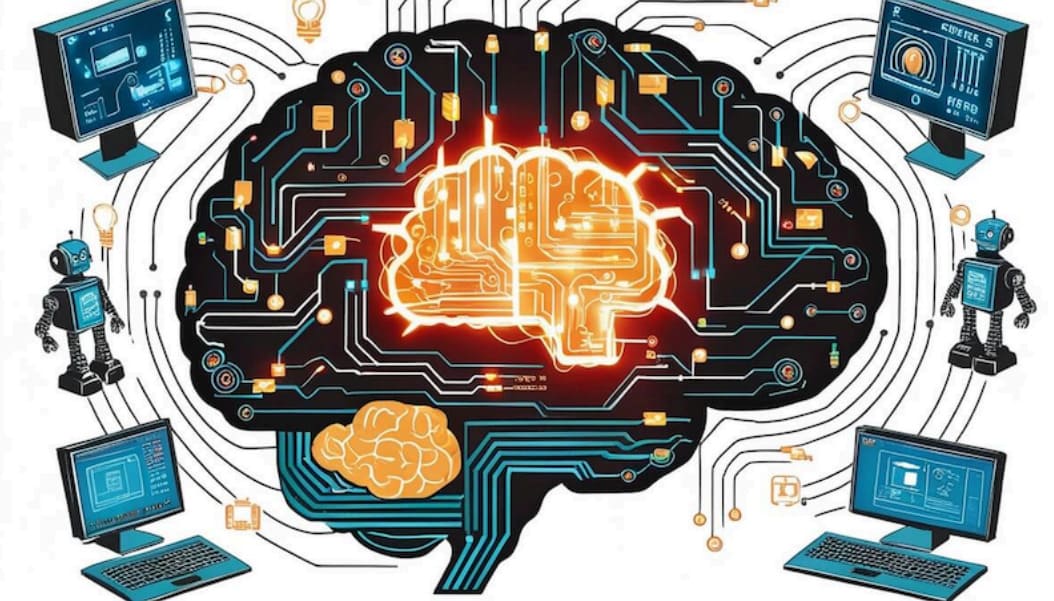
Continuing the topic of assistants and automation, we cannot fail to mention artificial intelligence and neural networks.
In general I would divide such assistants into 2 types: physical and virtual. Physical ones are robots you can physically touch and that can perform physical work. Virtual assistants can safely include various bots, neural networks and other software that exists in the depths of your computer, phone or the Internet. With physical robots everything is much more complicated. First, to produce a physical assistant you need parts; second, these parts must work as a single mechanism; third, even if there's a factory producing such robots, its branches are definitely not in all countries (and likely only in one), so delivering such robots is also a long and expensive process. With virtual assistants everything is simpler. They can be easily and quickly distributed over the Internet, they don't require physical assembly since they don't need parts. All they need is software and hardware. Today there are several companies that make very impressive physical robots, one of which is my favourite Boston Dynamics. They make incredibly smart dog-like robots that can stand firm when pushed, get up, jump, somersault, carry boxes and perform other simple actions. For example, one of the last things I saw was 3 robots decorating a Christmas tree, with two of them used as a stand and ladder for the third so it could reach the very top of the tree. Amazing, isn't it? Imagine what such robots could do in, say, 20 years.

Of course few can afford such a smart physical robot, and it's far from useful in everything. But unlike physical robots, virtual ones are already widely used. Overall 2023 was, if not a breakthrough in building assistants based on neural networks, then at least very hype-heavy. Everyone was talking about artificial intelligence and neural networks. And that's no surprise, since over the past couple of years hundreds of both narrowly specialised neural networks and general-purpose ones have been invented. General-purpose neural networks are a kind of encyclopedia that knows answers to almost all popular questions found in Google and other search engines. You can ask such neural networks for advice, ask them to explain what you don't understand. Neural networks can write entire articles. Whole books written exclusively by neural networks are being sold. So when reading an engaging novel or detective, if you don't look at the author line, in the future you may not even know who the real author is: a human or artificial intelligence.
We've just found out that neural networks handle textual information excellently. They can analyse it, give answers based on analysis and even create something from scratch. What else can neural networks do? Well, for example, draw images. Yes, there are several popular neural networks that incredibly well draw images based on just a few inputs. If for writing a book or just a blog post my brain can easily generate lots of ideas, with graphical information I do much worse. So many images, especially previews for my blog posts, are made by neural networks. Moreover we're considering using neural networks at work for image generation to save our designers' time for more important things and to save the company budget.
As you've gathered, artificial intelligence can do a lot. If you're unlikely to be able to use physical assistants, which aren't very accessible for mass use yet, with virtual ones things are much better. You can already start using neural networks to the full — they'll help you save time in your endeavours.
