
Almost every point I'll talk about in the slowing factors will concern the psychological side of a person. All except one. The one physical condition that can really suppress productivity we'll look at right now, then switch to psychological factors.
Although I said there is one physical condition that can negatively affect your productivity, other physical issues — from disability to illness — could be included too. But I'm not going into those, because with illness and especially disability such people are visibly different in society. Planning is inherently harder for them, and they have other priorities. That said, Paralympic champions would disagree with me.
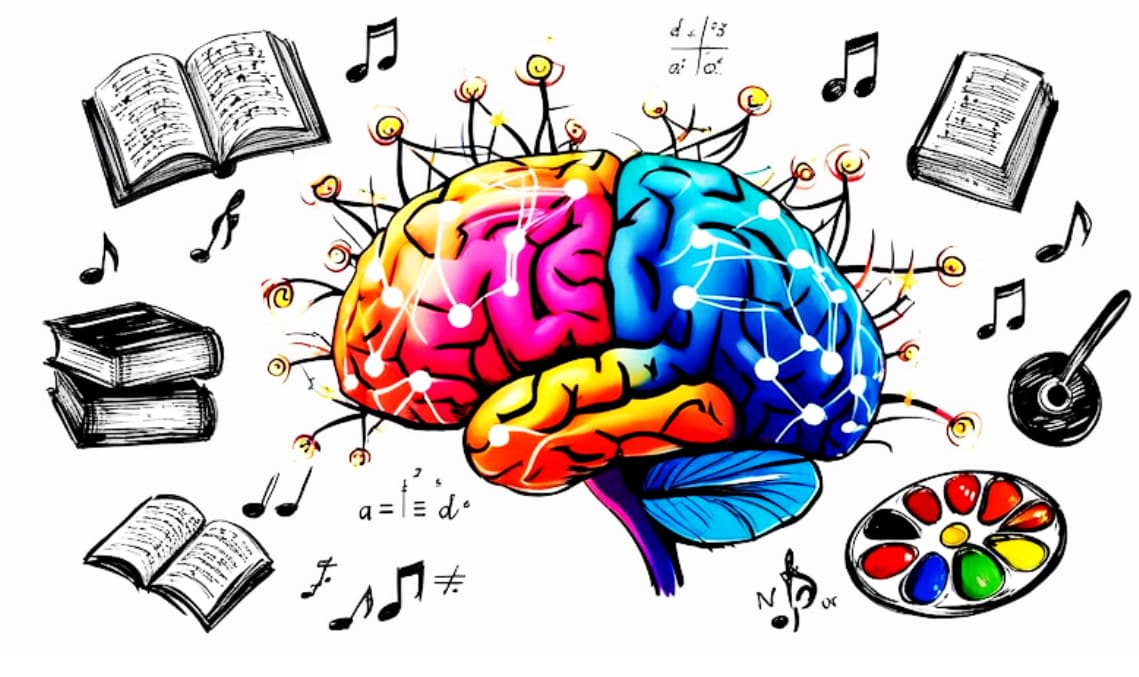
The one physical condition discussed in this chapter is damage to the striatum, which is located in the human brain. Here is what Charles Duhigg, author of "Smarter Faster Better: The Secrets of Being Productive in Life and Business", writes about the striatum:
The striatum acts as a kind of central dispatch of the brain: it relays commands from the prefrontal cortex — where decisions are made — to the older part of the brain, the basal ganglia, where movements and emotions arise. Neurologists believe the striatum helps turn decisions into actions and plays an important role in regulating mood.
Injuries and damage to the striatum vary in degree and severity, but when we speak of situations where "sick" people cannot be told apart from ordinary people, we're talking about tiny, almost invisible pinpoint hemorrhages. They can be detected on MRI, and these tiny hemorrhages are not life-threatening (at least, the book's author didn't mention that), but they do strongly affect behaviour and decision-making. Typically these are people who have lost all interest in life — "lazy" people who don't care what happens around them and who resemble burned-out workers more than people with a micro-injury in the head. Here is how Duhigg describes them:
Usually a relative brought the patient in for examination. The main complaints were a sudden change in behaviour and passivity. There were no signs of medical pathology. Tests for mental disorders showed no deviation from the norm. Patients had moderate or high IQ and appeared physically healthy. None said they felt depressed; none complained of apathy.
…
It was as if the part of the brain where motivation lives had completely disappeared. They had no negative thoughts, no positive thoughts. They had no thoughts at all. They hadn't become stupider or less aware of the world. Their former personalities were intact; the issue was a total absence of drive or motivating force. They had completely lost motivation."
The striatum is also involved in Parkinson's disease, but unlike Parkinson's, which often involves loss of physical control and depression, here we're talking purely about loss of life drive and motivation. Still, even such people can in time return to normal life and live fully again. Often restoring the desire to do something is a long game, in which the "patient" needs active help from both family and loved ones (constantly offering and nudging the "patient" to make choices) and from doctors, above all psychologists. Of course it's worth boosting motivation, and I'll write about how to do that later in this book.
