
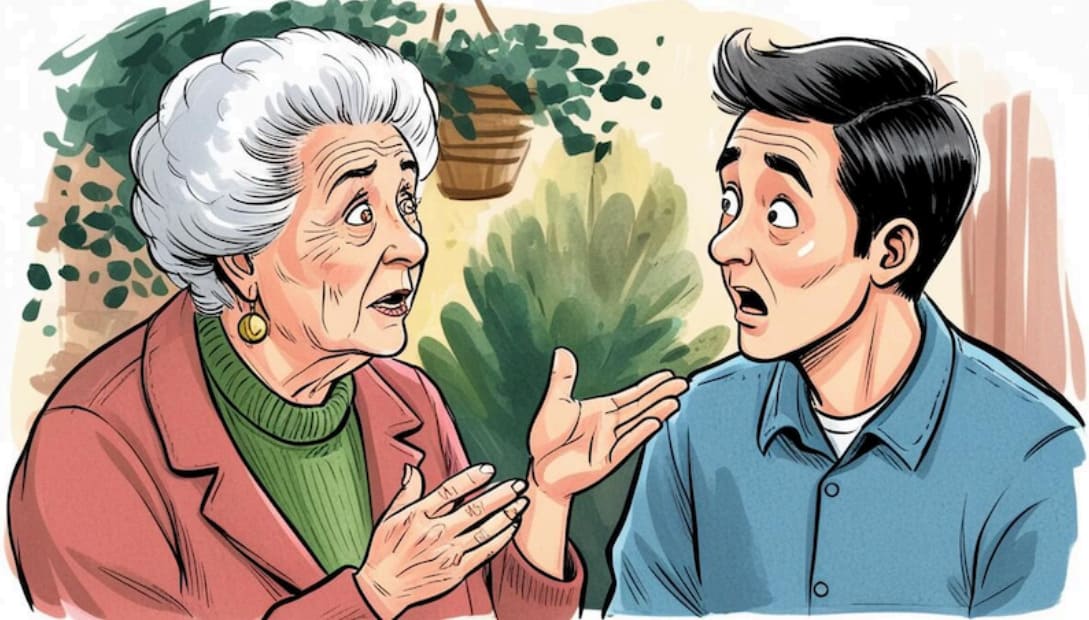
Continuing the theme of prejudices, the "life experience" of older generations deserves a separate mention — we already touched on it in the previous chapter. We remember that in terms of the time span our parents and grandparents have lived, they have lived very little and have been in contact with very few people. So we shouldn't take seriously phrases from older generations like "It was better before" or "It was different before". That refers only to a very small slice of time (0.00000058% of the age of the universe).
To test this idea, let's think through and weigh the most common "pros" and "cons" of older generations' life experience.
Let's start with what really is useful. Older generations can carry real wisdom. Wisdom like "no war" or "dress warm when you go out" — those are real and important. In the first case you probably can't do much; in the second it's worth listening and actually dressing warmer. As my mum says: "Better to sweat three times than freeze once." In general, parents and grandparents want the best for us, but we need to sift and filter their advice carefully.
Now the reasons we shouldn't always listen to older generations:
1) They always want to cushion their children and talk us out of almost any event with a probability of more than one hundredth of a percent. A trip to another country is something to be avoided altogether. What do you need there? If that country ever had tsunamis, volcanoes or dangerous animals and insects, parents are in for sleepless nights on valerian. They worry about us and try to eliminate every possible risk — and in doing so they kill our prospects and stop us from trying new things and learning.
2) They are often people who were poorly prepared for adult life: people who lived through wars or were born right after in the hungriest times. Their world and beliefs were built around hunger, fear, death and poverty. So they have stereotypes and a distorted picture of longer time spans or other places on Earth where things are better (or worse). But older generations also have serious blind spots:
a) Lack of up-to-date education or any education. I've already written in another chapter how important it is to keep learning throughout life. Unfortunately not all adults see that. Maybe they had no time for it, or didn't know it mattered.
b) Lack of financial literacy. At school we study many subjects from literature to chemistry; later we add philosophy, sociology, politics, economics and so on. But nowhere are we taught how to count money, manage it, save and invest, run a family budget or what a financial safety cushion is. In some countries it may be different, but I've never come across a country where at least one generation had a proper course in financial literacy.
c) Lack of medical literacy. I mean not only knowledge that was hard for our grandparents to get, but also lack of interest in looking after their health and seeing doctors. When ill, people often go to the pharmacy and buy something that may not help. Planned check-ups matter. In some countries the state requires a medical when you're hired and when contracts are renewed — good. In many clinics it's done just for the form — bad. Many believe conspiracy theories that feet are connected to all organs and you can diagnose and cure through them. Foot reflexology is the name; scientific studies don't support its effectiveness. I picture two surgeons operating on someone's leg and one saying: "Hold these vessels that connect the foot to the stomach and liver. And the splenic connection — if I cut that, the foot loses contact with the organ." We're dealing with people who don't read medical books, have little idea of modern medicine, don't like getting checked, don't prevent illness but treat it when it's too late.
I'm not trying to offend or mock older generations. There are many reasons why people ended up with outdated education, no financial literacy and no interest in medicine. I deliberately didn't add another big topic — upbringing, where for example many parents instilled a fixed mindset rather than a growth mindset. But compared with older generations, young people generally have no experience of raising children and are reluctant to have them. So it's not yet clear how our generations will raise theirs.
Going back to the points above: I hope I've made it clear that we should respect the views of older generations but not always follow or listen to them. Their advice and wishes, though sincere, are based on their personal experience and beliefs, which in our time may be completely out of date.
