
Before writing my first two productivity books, over the last 5 years I read more than a hundred other books. And although the first half of the books were on IT topics, the second half covered the widest range of subjects: self-improvement, planning, popular science, psychology, health, and many others. In my first book, throughout all the theoretical material, I repeatedly referred to various books and mentioned various authors. I also listed several books at the end of the book that I strongly recommended reading. It is time not only to mention them again, but to add others as well. Moreover, if in the book «How Can a Humanities Person Master Productivity and Planning?» I recommended books that would help improve your worldview for the better and close basic gaps in the exact sciences, then this time it is time to touch on more professional literature in the field of planning, efficiency, and achieving goals.
Before I recommend the books I consider most important and valuable, I will mention that on social networks and messengers, and also on my website, you can always find updated top lists on various books. Detailed book reviews. And very soon, film reviews and a lot of information about the space industry and humanity's daily achievements.
https://shitik.com/ru/
The first few books are not directly about productivity, planning, or efficiency. They are rather purely scientific, but written accessibly for ordinary people. I have to see every day that the overwhelming majority of people — yes, yes, and you are probably too — perceive reality and the world we live in in a completely distorted way. Distorted reality gives rise to distorted beliefs. Distorted beliefs, in turn, give rise to distorted goals and desires. Distorted goals and desires spend your energy, money, and time on something completely empty and unnecessary.
First and foremost, people should be rational in life's affairs and know at least the basic things about how the world they live in functions and what laws this world obeys. Well, if they are doing crazy stuff anyway, no productivity books will help them.
Sergei Yazev — Myths of the Past Century («Мифы минувшего века»)

Genre: Popular science
Comment: So far this is the best book I have ever read. I would not say I learned a great deal that was new in this book, but I was glad to find a kindred spirit who is not just an enthusiast but a scientist: a professor and doctor of physics and mathematics, a laureate and member of some prizes and organizations. Relying on science but explaining in accessible language, the author demolishes pseudosciences such as horoscopes, astrology, ufology, Nostradamus's predictions, and some medical «miracle» devices, and tells about popular charlatans of the past century who, being quite authoritative people, through trust and people's weak education could spread their insane ideas. I definitely recommend this book to everyone for reading.
Asya Kazantseva — Someone on the Internet Is Wrong! («В интернете кто-то неправ!»)

Genre: In search of truth, Interesting facts, Investigative journalism, Popular science, Social psychology
Comment: The telling title of the book does not fully reflect its meaning, but that is even for the better. The book is about the uselessness (or rather harmlessness) of homeopathy, about whether there is real benefit from acupuncture, about how you should not only not be afraid to eat GMO products but also how they are often significantly safer and more beneficial, about vegans and vegetarians, about religion, the benefits and harms of meat, vitamins, and many other topics. From the standpoint of biology and evolution the author dispels popular myths and entrenched opinions. All the information is backed up by a bunch of medical studies in laboratory conditions and psychological studies. All topics go hand in hand with biology and the human body without complex terms, in very accessible language. At the end of the book the author still tries to return to the book's original title and describes how, among a heap of information on the internet, to sift real sciences and research from pseudosciences and dubious sources. One of the best books I have read. So I consider it a must-read!
George S. Clason — The Richest Man in Babylon
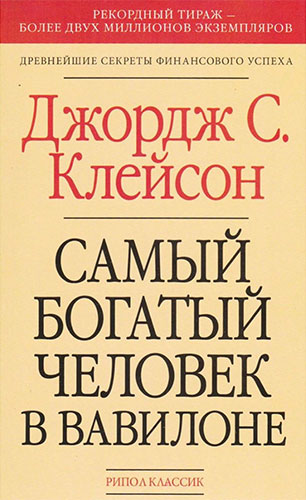
Genre: Personal effectiveness, Personal finance, Self-improvement, Financial well-being
Comment: Probably this is one of the best books I have had the chance to read about money and financial well-being. Such topics as saving money, budget allocation, investments, and even promissory notes and secured loans are touched upon. And all of this is described in the clearest language with examples from ancient tales and stories.
Alexander Panchin — Apophenia («Апофения»)

Genre: Anti-utopia, Ironic prose, Social fiction
Comment: The book is written in the anti-utopia genre and presented in a humorous style. In all honesty I envy the author that he wrote this work, not I. This is one of the very first books I would definitely show to conspiracy theorists, horoscope lovers, believers in charged water, and everyone who tends to see hidden meanings where there simply are none. Exactly to the extent that the situation in this book will seem absurd to you, to me, as someone who has been into the exact sciences for about 15 years, the everyday decisions and behavior of most people seem daily. Surely everyone reading this book will be baffled by how insane the situations described are, but unfortunately absolutely everyone in real life engages in even sillier and more ridiculous things than these — and does not notice. 10 out of 10. A must-read! All the more so because the volume is small and you can read it in 1–2 evenings.
Malcolm Gladwell — Outliers: The Story of Success

Genre: Success stories, Self-improvement / personal growth, Social psychology, Psychology of success
Comment: A general-development book I knew about beforehand. Moreover, I even knew what examples there would be and what the book was about in general. But while reading, the book still regularly surprised me with various interesting facts. I liked the book so much that instead of re-reading a huge set of notes I will re-listen to its audiobook during runs. The book is about how month of birth affects a person (but no, not from the standpoint of astrology and horoscopes, but purely from the standpoint of morals and rules that we ourselves built in society). Many national traits and the mentality of different countries are analyzed in the book; the book has an answer to the question of why Asians are especially good at mathematics, dispelling the myth of their mental superpowers, and also why passenger planes piloted by Korean ace pilots used to crash very often, and also an interesting comparison of Robert Oppenheimer with Christopher Langan (the man with the highest IQ in the world). One of the book's main messages: the importance of luck, the chance to be born in the right generation, in the right society, at the right time.
Carol Tavris, Elliot Aronson — Mistakes Were Made (But Not by Me)

Genre: Psychology
Comment: This book is simply a bombshell. I definitely recommend everyone read it. It tells about how important it is to admit your mistakes and stop instead of continuing to push your line and make the situation worse. The book touches on the most varied spheres of human life, from family relationships to relationships at school and work. The most varied examples and real stories of both famous and unknown people are given.
Robert Kiyosaki — Rich Dad Poor Dad
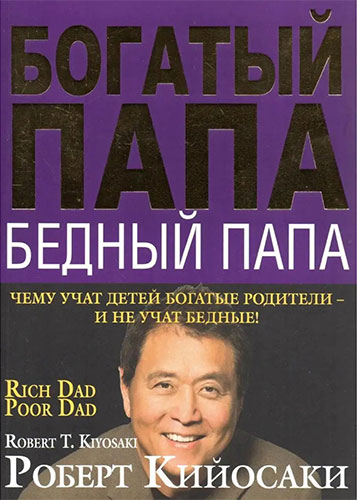
Genre: Personal finance, Self-improvement, Financial well-being
Comment: The content of the book stuck well in my memory even several years after reading, which says that the author described all the events in an interesting way and structured the book well. Overall, the book is about comparing the influence and radically different advice of the hero's own father and his friend's father, with whom the main character also spent a lot of time.
Carol Dweck — Mindset: The New Psychology of Success

Genre: Psychology, Self-improvement, Books for parents, Scientific research
Comment: This is a very good book about two types of mindsets in life. About which mindset should prevail in adults and children, and what a wrong mindset or, for example, wrong praise of children can lead to.
James Clear — Atomic Habits

Genre: Personal effectiveness, Practical psychology, Self-improvement / personal growth
Comment: A good book for those who have problems with self-discipline and who would like to develop good habits and get rid of bad ones. Four fundamental rules are described, by following which you can easily develop new good habits. There are practical examples of what and how you should do.
Mason Currey — Daily Rituals: How Artists Work
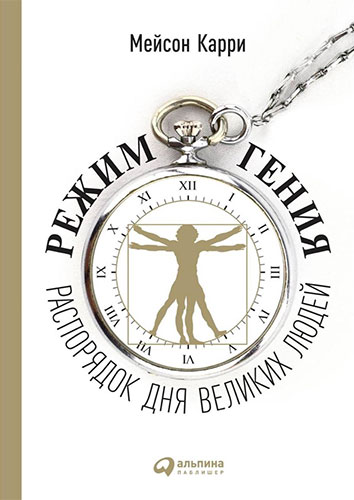
Genre: Personal effectiveness, Planning, Practical recommendations, Time management
Comment: A book about the daily routines of great writers, musicians, and artists. Also in the book you can find the daily routines of Einstein, Tesla, and some other scientists. And although the book, unfortunately, has not a single daily routine of a successful businessman or famous athlete, nevertheless the book covers more than 150 great and creative people. Night owls and early birds, born in rich families and poor ones, workaholics and lovers of social events and alcohol. The author recounts all available information about their lives and tells in detail about how they planned their day (if they planned at all), what they all had in common, and conversely, in what they were unique. Definitely a good book that I recommend reading.
Olga Mironenko, Elena Mironenko — Achilles Didn’t Wear Disposable Shoe Covers («Ахилл не носил одноразовых бахил»)

Genre: Popular science, Ecology
Comment: A book about ecology, about what plastic labeling markings exist, which are more harmful and which less. It tells about the ecological path of various items of our everyday life. There are also practical tips on how you can contribute to ecology by giving up some items in favor of others.
Brian Tracy — Eat That Frog!

Genre: Personal effectiveness, Self-improvement, Personal growth
Comment: A very small but at the same time very cool book will tell you how to level yourself up. A book about how to achieve set goals at work and in personal life, how to properly approach and tackle unpleasant and difficult tasks, engage in task planning, and some other interesting facts and observations. And although my notes take up only 2 pages, they contain very important material for me that I gladly re-read every time.
Dave Logan — Tribal Leadership

Genre: Team approach, Corporate culture, Self-improvement, Leadership, Management psychology
Comment: After reading this book, for the first few months you will most likely start matching all your relatives, friends, and acquaintances to five groups of people in society and distributing them according to the criteria the author proposed. The book is decently structured and reads quite well. Although, as it seems to me, the material laid out in 300 pages could have been fit into 200. Surprisingly, I ended up with a huge set of notes, although the main message of the book could have fit on one page.
Robert Sapolsky — Why Zebras Don’t Get Ulcers

Genre: Medicine, Psychology, Self-improvement, Coping with stress
Comment: This is the first book full of medical terms and human organs that I read. I probably would hardly have gotten to it if not for the readers' club at work. Besides ordinary reading I also listened to it on runs in audio format, so after almost two readings some material even managed to stick in my head. The book is generally good; it tells about the influence of stress on the body, when stress cannot provoke illness and when it can, and also which organs can suffer from stress and which cannot.
Geoff Colvin — Talent Is Overrated
Genre: Psychology, Personal effectiveness, Decision-making, Self-improvement
Comment: Another book about productivity. If I could describe it in three theses, I would describe it as «no talent exists», «deliberate practice plays a key role», «the multiplication effect is also important». By the way, what you understand by deliberate practice is most likely completely not what I mean. Therefore I definitely recommend reading this book.
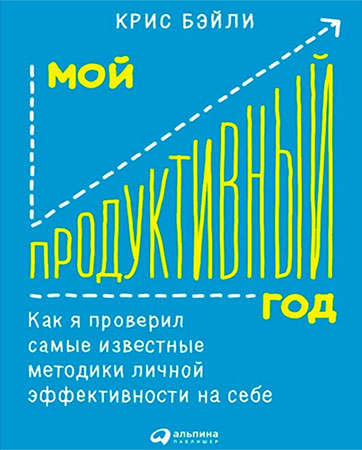
Chris Bailey — The Productivity Project
Genre: Personal effectiveness, Practical psychology, Self-improvement / personal growth
Comment: A book that may be useful for those who want to control their time and procrastinate less. The main emphasis is on time (its allocation), attention (concentration), energy (strength and desire to do something).
Kim Scott — Radical Candor

Genre: Leadership, Motivation, Management psychology, Personnel management
Comment: Not a bad book about team management. Such topics as career growth and stability, praise and criticism, motivation, frankness and honesty are raised; personality types such as rock stars and superstars are touched upon.
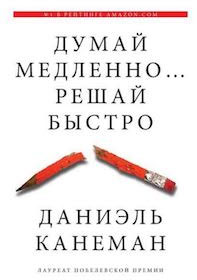
Daniel Kahneman — Thinking, Fast and Slow
Genre: Psychology, Cognitive biases, Personal effectiveness, Decision-making, Self-improvement, Probability theory
Comment: A book about how we make decisions and think when making decisions. The author describes how our thinking and intuition are very often subject to errors and warnings. We often absolutely do not want to believe probability theory and statistics, choosing not the most correct decisions, having trusted our intuition. We do not take regression to the mean into account, and we are very often affected by various anchors that were deliberately or accidentally imposed on us during decision-making. Kahneman describes these and other techniques in this book. In terms of perception the book seemed somewhat difficult and boring in places to me, perhaps because I am not very interested in and do not love psychology, or perhaps because mixing psychology with probability theory and statistics is quite a perversion.
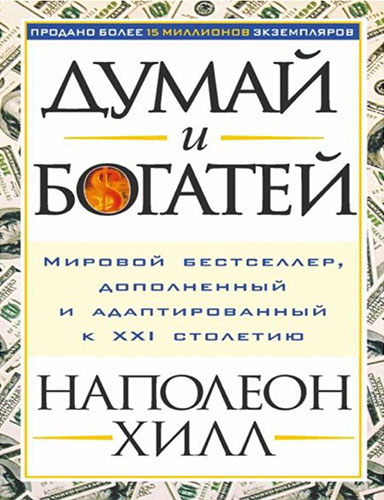
Napoleon Hill — Think and Grow Rich
Genre: Personal finance, Self-improvement, Financial well-being
Comment: A very ambiguous book. At first it did not please me very much, but closer to the end interesting moments were found more often, one of which I even wrote a post about on my blog. And so, what are the main drawbacks I saw in this book. The main thing is that this book should not fall into the hands of a fanatic, because a lot of attention is paid there to self-suggestion and belief. Not that I am against it, but among my acquaintances there are already a couple of such people. Who live in their own world, nothing worthwhile happens in their lives, but at least you can laugh at them. Also the book is very old and all the examples and industries are accordingly old too. The author constantly flirts with pseudosciences and space, although by the book it is visible that he is lost in space terminology, but for a book over 80 years old that is not scary. From the pluses: a very well structured book. Almost for every chapter there are precise lists of N points of what to do or not to do. Small subsections, which is convenient for reading. So, overall I still recommend this book.
John Gray — Men Are from Mars, Women Are from Venus

Genre: Psychology
Comment: A book describing differences between men and women. About how men and women listen differently, carry out requests and tasks differently, and react to events differently. Also described in the book are relationship values that rank first for women and primary relationship values for men.
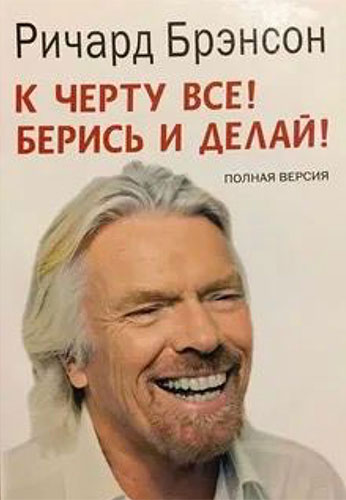
Richard Branson — Screw It, Let’s Do It
Genre: Self-improvement, Motivation
Comment: An autobiographical book by a British billionaire in which he tells both good and bad stories from his life. Probably, after reading this book I would not take Richard as a role model, and his lifestyle would suit far from everyone, but definitely there were some good and interesting thoughts for me in this book. So I would rather recommend reading this book at least once than not.
Marshall Rosenberg — Nonviolent Communication: A Language of Life
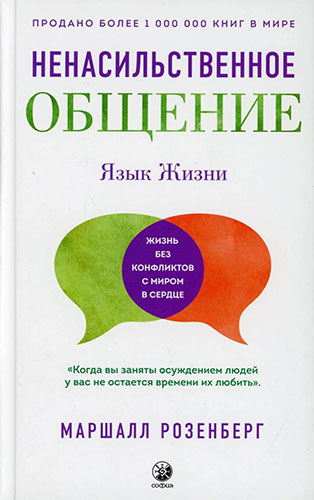
Genre: Social psychology, Communication and relationship psychology
Comment: Not a bad book, but I hardly think it will suit everyone. And although psychopaths and egoists are unlikely to change after reading it, it would still be useful for them to learn that there are other ways of communicating. The book describes a whole system with clearly built steps. The author regularly uses it and, as he claims, with its help settled quite a few conflicts.
James C. Humes — Speak Like Churchill, Stand Like Lincoln
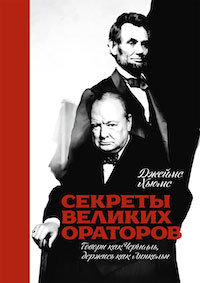
Genre: Biographies and memoirs, Foreign business literature, Client acquisition
Comment: Definitely a good book that tells about what and how different leaders of their peoples said in the hardest times. What speech they chose to unite and rally people and simply to make an impression as leaders. Opening speech, pauses, glances, jokes, clothing, and even accessories — all of this has great meaning.
Stephen Hawking — A Brief History of Time
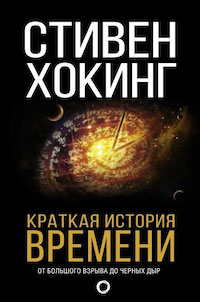
Genre: Astronomy, Astrophysics
Comment: Stephen Hawking is one of my idols. I have already read this book a second time and will most likely re-read it again someday. It is amazing how a disabled person who for almost his entire conscious life had only a few fingers of his hands working, who lost the ability to speak, nevertheless managed to become a great scientist and write more than a dozen books. In this book, by the way, he does not use a single formula and explains everything in accessible language.
Alexey Markov — The Frog, the Elephant and Broccoli («Лягушка, слон и брокколи»)

Genre: Self-improvement, Personal effectiveness, Decision-making
Comment: Not a bad book on self-improvement and personal effectiveness. Perhaps for someone it would be an excellent opportunity to look at their life anew. I ended up with a not very small set of notes that reads in one sitting. Also took note of some books recommended by the author.
