
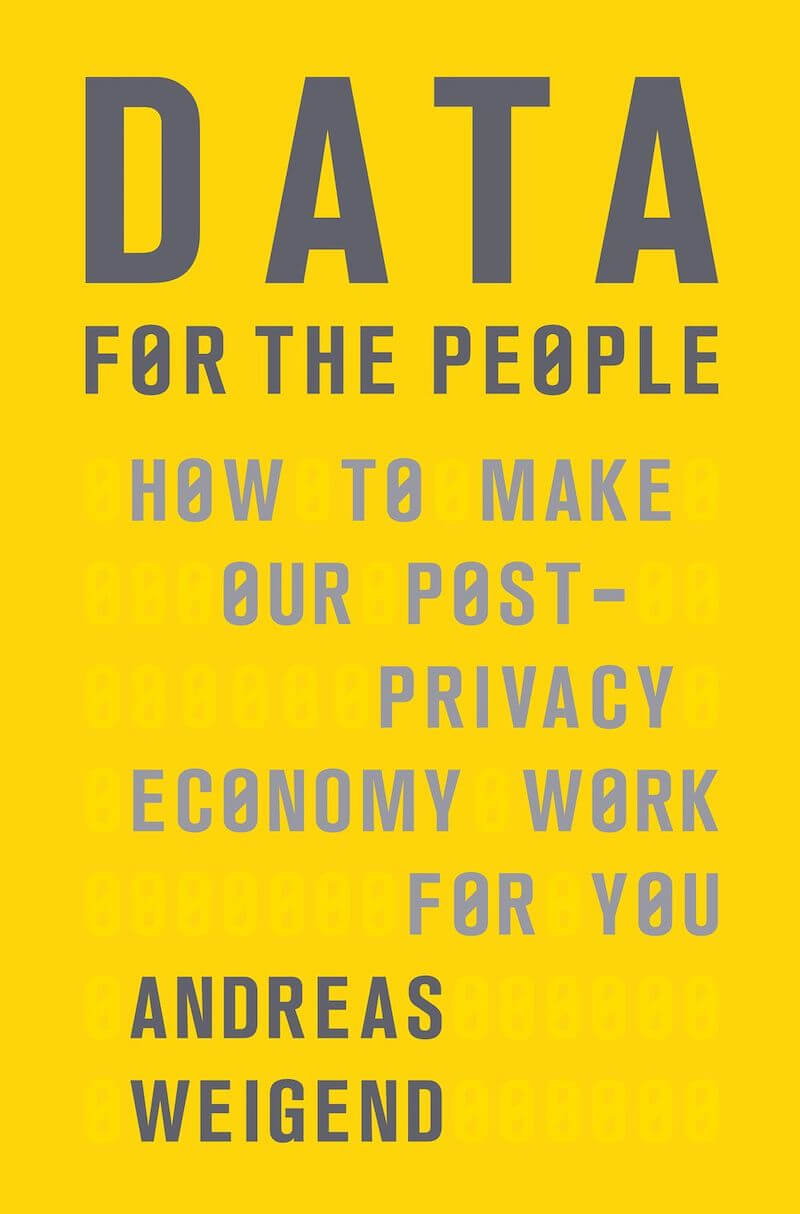
General Description
A book slightly over 350 pages long, consisting of 7 chapters. It mainly consists of dry text, although occasionally one can find a rare image. There is no code, diagrams, or charts in the book. It reads quite easily and quickly.
Brief Overview
In the introductory chapter, the author raises the question of using data for the benefit of people, not just companies, since data is now not just a byproduct but a valuable resource.
Next, the author addresses the term "info-processing," describes what signal and noise are. Classifies data into different groups and types — for example, on one hand data can be classified as description, prediction, or instruction, on the other — as clicks, contacts, and content.
After this, the conflict between privacy and honesty in the digital world is examined. We live in a reality where transparency can be useful but also frightening. Examples are given of identifying people by font usage, click frequency, typos, and the like. The author concludes that social data is the most valuable raw material of the 21st century, the new oil.
Next, the issues of digital identity and reputation in social networks are considered. Our online profile has become an integral part of public life. The author describes that to predict a person's interests, it's more important to know not who they are, but who their acquaintances are.
It is analyzed how sensorization technologies (sensors, wearable devices, smartphones) are changing the perception of the environment. Quite interesting examples of GPS operation, use of photo metadata, and other tracking methods are provided.
The author introduces two rights that contribute to increasing transparency in data processing, and four rights that contribute to expanding user freedom of choice.
Instead of top-down control, the author suggests giving people freedom of choice based on information. Users should have a way to assess the potential benefit from data processors before they provide them with their data.
Opinion
The book reads in one breath. However, I gained very little new and useful information from it, hence the summary is only a few pages long. Of course, it has interesting examples and facts, but because of the loud, speaking title, expectations were slightly higher. No specific technologies are considered here, and if we're talking about surveillance and data collection, then Mitnick's book would be more interesting.
