
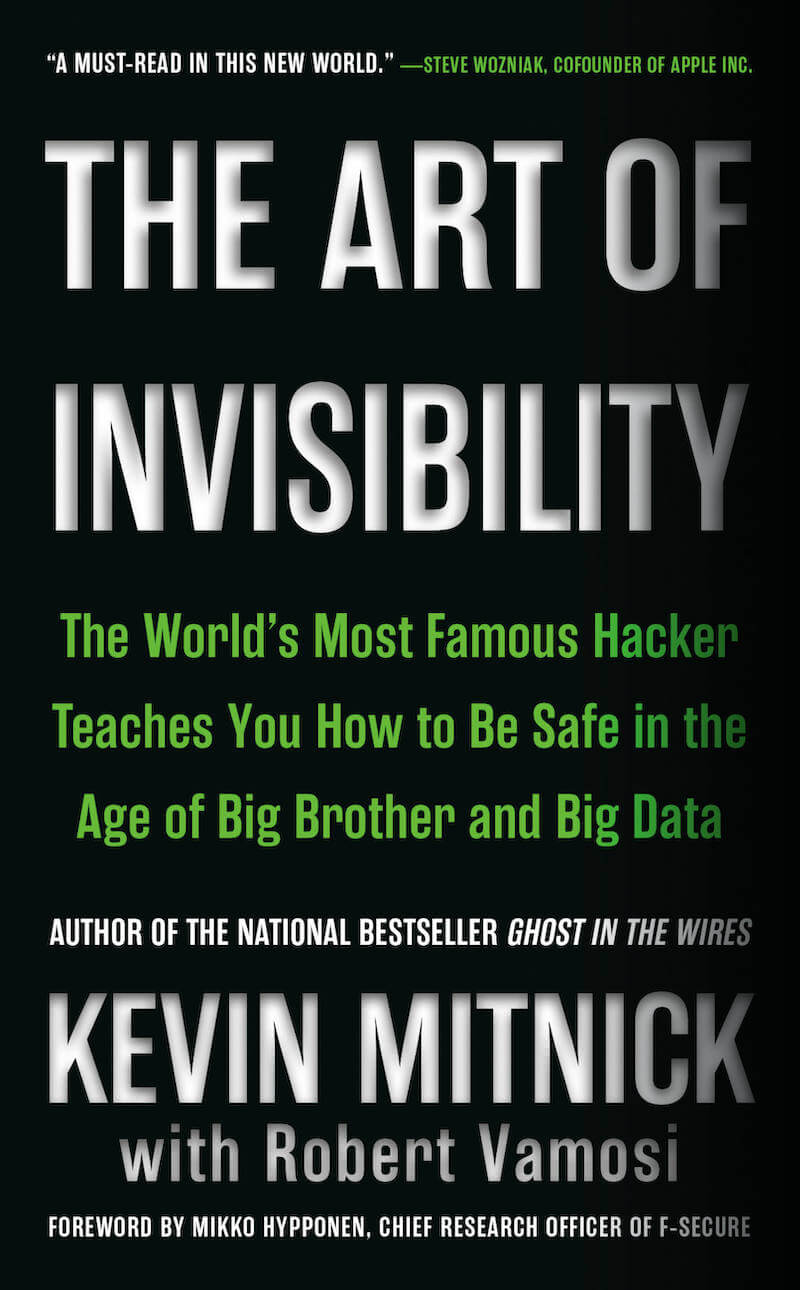
General Description
The book, slightly over 450 pages long, consists of 16 chapters (though the number may vary across editions and translations). It contains no images, diagrams, charts, or code—strictly text-based. Despite the lack of content variety, it is quite easy and interesting to read.
Brief Overview
I won’t delve into all 16 chapters, but I’ll try to briefly summarize their essence. Perhaps some chapters can be grouped together.
At the beginning of the book, the author demonstrates how difficult it is to maintain privacy in the modern world unless it is actively protected. In one of the early chapters, he highlights the unreliability of passwords. Password databases are constantly hacked and leaked online, and passwords can also be guessed through brute force. Therefore, the author recommends considering additional security measures—such as two-factor authentication and using specialized screen-locking programs that determine your distance from the computer using Bluetooth technology.
Following passwords, the author identifies email as a weak point. He examines who exactly can read your emails (using a hosting provider storing emails as an example). The author also advises encrypting the text of messages so that only the recipient can read them. Additionally, social engineering is discussed early in the book—a method of unauthorized access to information through psychological manipulation and influencing a person’s actions to make them comply with desired outcomes.
There’s a fascinating chapter on the basics of eavesdropping—methods of intercepting audio and video signals: bugs, hidden microphones, hacking cameras, tracking via cell towers, and other techniques. The chapter on encryption (types, differences, programs) is also highly informative.
Later, the book transitions into the so-called “practical” part, where the author describes some tools and approaches to achieving anonymity online. The HTTPS protocol, working with IP addresses, and much more are covered. Alongside this, the topic of large companies tracking users to create precise digital profiles and highly targeted advertising is addressed. Browser versions, operating systems, and even mouse-click intensity—these and other factors are described by the author as ways of collecting information about you. Some tools and browser extensions that help confuse data-collecting platforms are also discussed.
The book touches on the subject of cyber extortion and blackmail, explaining why you should never pay criminals. Examples of attack vectors are provided: from creating fake websites with accurate designs to phishing and social engineering. Tips on protecting against such threats are also given.
The final chapters of the book serve as a summary of everything previously written, focusing directly on the practical aspects of anonymity and what needs to be done to maintain it. The author goes into great detail, outlining all possible steps: from buying SIM cards through third parties and using cryptocurrency with mixers—to configuring software and hardware and employing secure communication tools with mandatory encryption of correspondence.
Opinion
Unfortunately, the author of the book passed away from cancer in 2023, but he left behind an excellent work that can be useful not only to IT professionals but also to ordinary users of smartphones, computers, and other “smart” devices—be it a TV, speaker, or watch. A former hacker explains how to protect yourself from hacking in a very accessible way. Every year, when rereading my notes, I usually manage to reduce their volume by 5–7 percent by removing information I’ve already memorized or consider irrelevant. However, when rereading the notes from this book, I can’t delete a single line—this information is always relevant, interesting, and valuable.
This article is purely a review of the book and does not carry any advisory nature. The tools and methods described in the book are provided for informational purposes only—this is not a call to action on my part. Moreover, some technologies or practices may be restricted, blocked, or illegal in certain countries, and their use should be assessed by each reader independently, taking into account local legislation and personal responsibility.
