
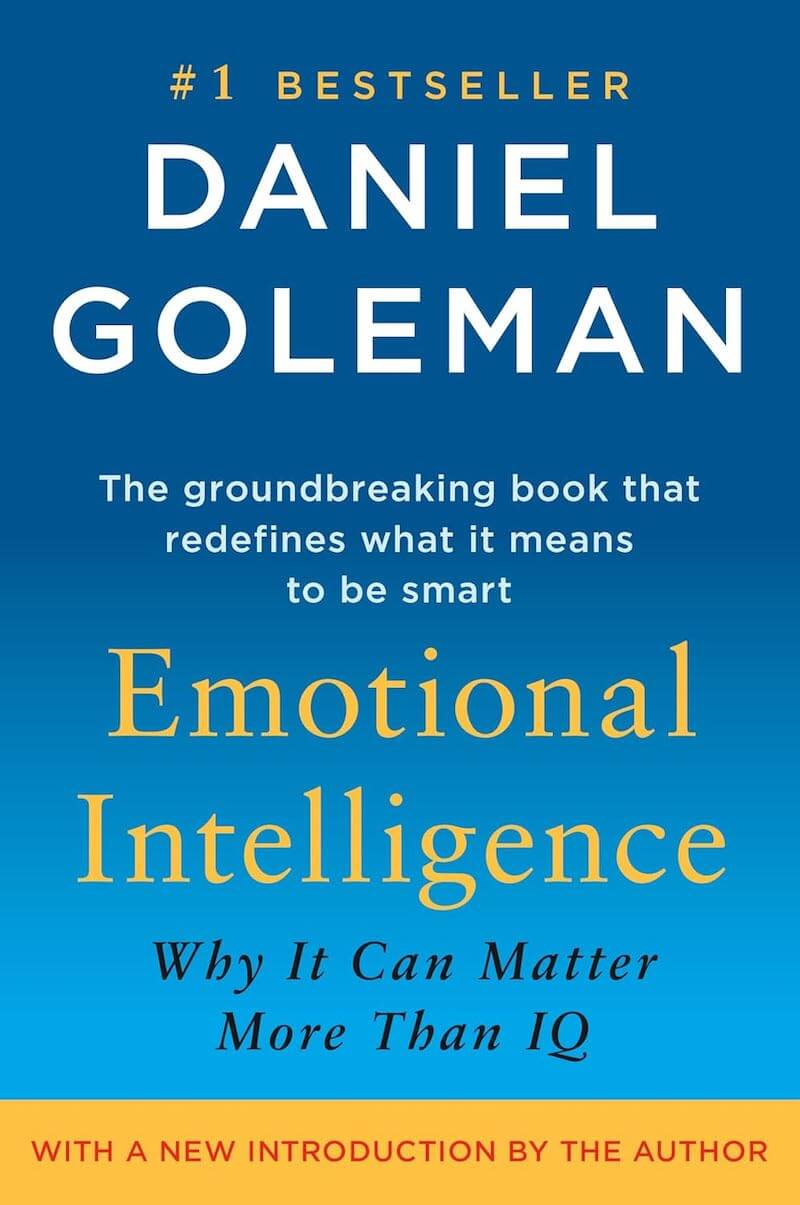
General Description
Not a small book, almost 500 pages in size. It consists of 16 chapters and 6 appendices. There are audiobook versions available. The book's content is presented only as text, so you won't find images, tables, or diagrams here (though in some editions, I think some text might have been formatted into tables). The reading difficulty level varies from chapter to chapter. Overall, I'd say most of the book is easy to read, but when it comes to medical terminology and the workings of the brain and other organs, the level increases to at least medium, and sometimes to difficult.
Brief Overview
Part I. What is the emotional brain (2 chapters)
In the first chapter, the author shows that emotion is an ancient evolutionary mechanism that is extremely necessary for humans. Emotions mainly help, but sometimes they can also be harmful. Nevertheless, understanding this is the first step toward managing emotions.
Here it's explained in detail how the brain is structured from the perspective of how emotions arise, how we react to them, and their consequences. Everything is analyzed purely from a medical perspective. The amygdala, cerebral cortex, and other structures are broken down. And most interestingly - all the analysis is done in the context of evolution and how new emotions appeared as the brain perfected itself.
Part II. The nature of emotional intelligence (5 chapters, 6 in some editions)
It begins with a chapter that describes situations when emotions block rationality. It's about outbursts of anger, panic, and similar reactions. The author shows that intelligence by itself doesn't guarantee success if there's no skill to manage one's feelings.
Then there are several chapters about the importance of controlling emotions and the ability to catch (recognize) the moment between emotion and action. That is, it's important to manage feelings (primarily negative ones), and this is only possible if we understand that at the current moment we are experiencing a particular feeling.
Continuing the theme of emotional control, the topic of self-awareness is raised - the ability to recognize one's own emotions and understand how they affect behavior and decision-making. It's noted that people with high self-awareness are less likely to act impulsively.
Great attention is also paid to empathy (the ability to understand other people's feelings) as one of the main components (all of them, by the way, are clearly listed in the book), which allows for better understanding of others, clearer articulation of one's thoughts, and more effective communication (this is almost entirely dedicated to the 3rd section).
At the end of the section, the topic of upbringing (which will be discussed in detail in sections 4 and 5) is raised. Here the emphasis is on how children easily adopt all parental reactions to stress, conflicts, and joy and copy them exactly. At the same time, the author emphasizes: emotional intelligence is largely teachable.
Part III. Emotional intelligence in action (3 chapters)
Here I could describe each chapter separately, but I'll try to combine everything in one paragraph. This section discusses how emotional intelligence affects relationships at work, in family, and in society. The ability to manage and resolve conflicts works best for people with high emotional intelligence. Emotional intelligence (EQ) is no less important than IQ, and people who achieve particular success in work and family are predominantly those with well-developed types of intelligence.
Part IV. Windows of opportunity (3 chapters, 4 in some editions)
I'll also describe all chapters in a single contextual framework. Here considerable attention is given to stress, aggression, and anxiety. It describes how they destroy the body at a biological level and lead to a series of problems and diseases. Along with this, the author shows methods that help cope with stress, work through old traumas, and return to normal daily life.
Part V. Emotional literacy (2 chapters)
The main idea and message of these chapters is to instill the correct reaction to emotions from childhood in the process of raising children. The author emphasizes the huge role of parents, teachers, and caregivers, many of whom, unfortunately, are not familiar with the concept of emotional intelligence and would themselves benefit from learning it. Nevertheless, progressive classes and schools are shown where different programs for the development and education of emotional intelligence are actively applied.
There are also several appendices in the book that excellently summarize all the main text into more concise and clear messages and thoughts. For example, it describes the signs of emotional intelligence, school training programs from the previous chapter, and how emotions work at a medical level.
Opinion
Minuses
First, I'll describe a few minuses I found in this book. First, the book is large, which means many topics can be vague and lack specific clarity when transitioning to other topics. Sometimes it's not quite obvious how a particular subchapter relates to the section as a whole. I generally more than agree with the concept of emotional intelligence, but I think that success depends not only on it and general intelligence (the author thinks exactly so). There is another component, which I plan to write about in my blog. And as I noted above - in places, the book is difficult to perceive due to detailed medical descriptions, or rather the biological structure of the brain.
Pluses
And now I'll move to the pluses, of which I counted an incredible number in this book. I'll start with the obvious, which is already clear from the title: the topic of emotional intelligence is raised and revealed, as it seems to me, quite well. I don't know if this is an author's term or if someone else had already introduced it into circulation, but in any case, defining a clear list of the components of emotional intelligence - is an excellent idea.
Another good plus is that in the book, emotions are described from the perspective of biology and different parts of the brain (and not just the brain), as this is far from common in such books. Moreover, this is done taking evolution into account: it's shown how at different periods in the development of the human brain's ancestors, reactions to emotions were formed.
Another plus of the book - numerous life examples from the author's and his colleagues' experience. These were situations at work, in school, and in relationships between people. Many examples were accompanied by scientific experiments.
Personality types are analyzed quite well (in general terms, without deep immersion), as well as how men and women react differently to the same events and set different expectations and approaches to conflict resolution.
A separate and huge plus - the issue of child education is addressed. Moreover, not just difficulties are listed, but specific techniques for developing emotional intelligence used in schools are described in detail, and their results are presented.
The book also raises the issue of interaction between medical personnel and patients. Very often, doctors, lacking emotional intelligence, build communication with patients incorrectly. And having EQ can actually help patients and more effectively convey treatment methods to them.
So this book - a solid 10 out of 10. It will definitely burst into my list of best books and take a high place there. If anyone has read books by another author - Robert Sapolski on medicine or psychology (for example, the wonderful book about stress and its effect on the body "Why Zebras Don't Get Heart Attacks"), then it can be said that this book is written in a similar style and complements Sapolski's book well. By the way, I recommend reading my blog article about "bad" hormones and whether they are needed in the 21st century.
