
General Information
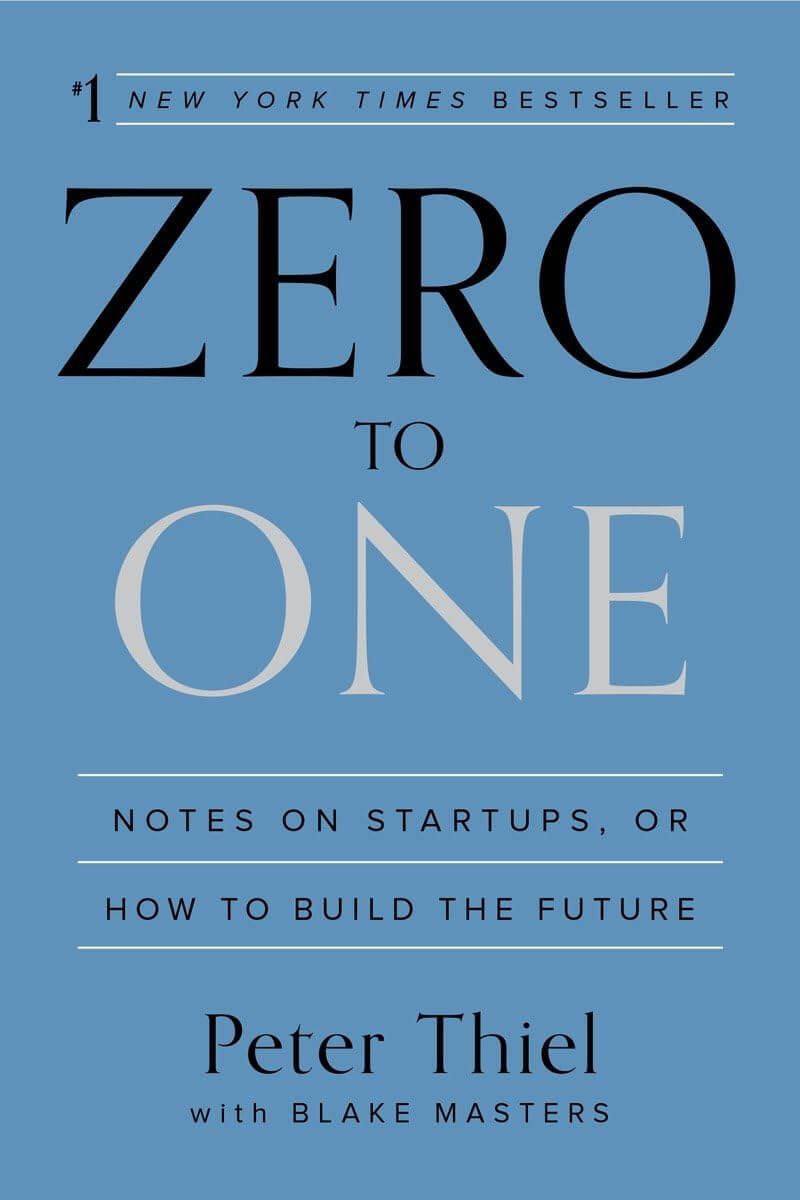
A book consisting of 14 chapters about building startups. In addition to the text, you may occasionally come across inserts of images and charts. The difficulty level is easy.
Table of Contents
- Chapter 1. The Challenge of the Future
- Chapter 2. Party Like It's 1999
- Chapter 3. All Happy Companies Are Alike
- Chapter 4. The Ideology of Competition
- Chapter 5. The Last Mover Advantage
- Chapter 6. You Are Not a Lottery Ticket
- Chapter 7. Follow the Money
- Chapter 8. Secrets
- Chapter 9. Foundations
- Chapter 10. How to Build a Mafia
- Chapter 11. If You Build It, Will They Come?
- Chapter 12. Man and Machine
- Chapter 13. Seeing the World with Fresh Eyes
- Chapter 14. The Founder's Paradox
Brief Description
The book "Zero to One" is dedicated to creating fundamentally new products and companies that do not copy existing solutions but create something unique. Peter Thiel contrasts two types of progress: horizontal (from 1 to n), where ideas are scaled and copied, and vertical (from 0 to 1), where something fundamentally new emerges. It is the second type of progress, according to the author, that moves the world forward and creates truly valuable companies.
Successful companies do not fight in conditions of fierce competition but strive for a monopoly — not in a negative sense, but as a unique position in the market based on technology, network, brand, or economies of scale. All "happy companies," in the author's opinion, are unique in their own way and solve a specific problem better than anyone else.
Particular attention is paid to the founder's mindset. Startup success is not a lottery or luck but the result of a clear vision, long-term planning, and the ability to see hidden opportunities. Thiel emphasizes the importance of "secrets" — ideas and truths about the world that are not yet widely accepted. The best startups are built on such insights.
The author elaborates on the fundamental elements of a company: team, culture, role distribution, sales, and market entry strategy. He shows that technical superiority alone is not enough — even the best product needs competent sales and positioning.
Opinion
A book from one of the creators of PayPal, who shared a lot about building startups and competition (including his own competition with Elon Musk). One of the author's ideas about monopoly and competition formed the basis of one of my posts.
