
General Description
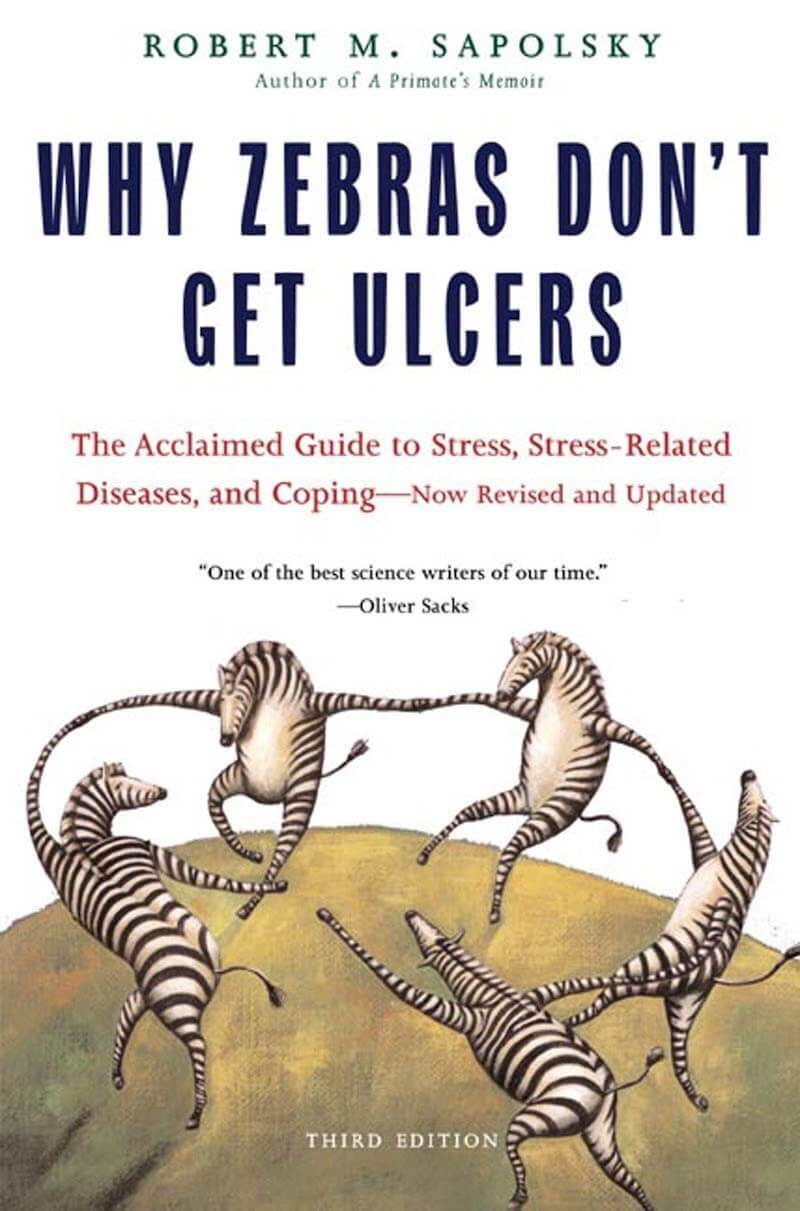
A book of almost 500 pages by a well-known American scientist and science popularizer. It consists of 18 chapters, the titles of which are listed below. In addition to textual information, it includes many images. An audio version is available. Difficulty level — intermediate.
Contents
- Why Zebras Don't Get Ulcers
- Glands, Goosebumps, and Hormones
- Stroke, Heart Attacks, and Voodoo Death
- Stress, Metabolism, and Liquidating Your Assets
- Ulcers, the Runs, and Hot Fudge Sundaes
- Dwarfsm and the Importance of Mothers
- Sex and Reproduction
- Immunity, Stress, and Disease
- Stress and Pain
- Stress and Memory
- Stress and a Good Night's Sleep
- Aging and Death
- Why Is Psychological Stress Stressful?
- Stress and Depression
- Personality, Temperament, and Their Stress-Related Consequences
- Junkies, Adrenaline Junkies, and Pleasure
- The View from the Bottom
- Managing Stress
Opinion
This is the first book filled with medical terms and detailed descriptions of how human organs function that I have read. I probably wouldn't have gotten around to it if not for a book club at work. Besides regular reading, I also listened to it in audio format while running, so after almost two readings, some of the material even managed to stick in my head.
The book is generally good: it talks about the impact of stress on the body, when stress can and cannot provoke illnesses, as well as which organs can suffer from stress and which cannot. Considerable attention is paid to certain hormones and the organs that produce them.
If you want explanations for questions related to stress from a biological and bodily process perspective, then this book is just what you need. If this topic greatly interests you, there are many videos of Robert Sapolsky's talks and interviews online on a wide variety of topics related to emotional intelligence and human biological makeup.
It's also worth noting that the text of the book is well-structured and clearly divided into chapters; however, if this is one of your first books on medicine, some chapters may seem difficult.
