
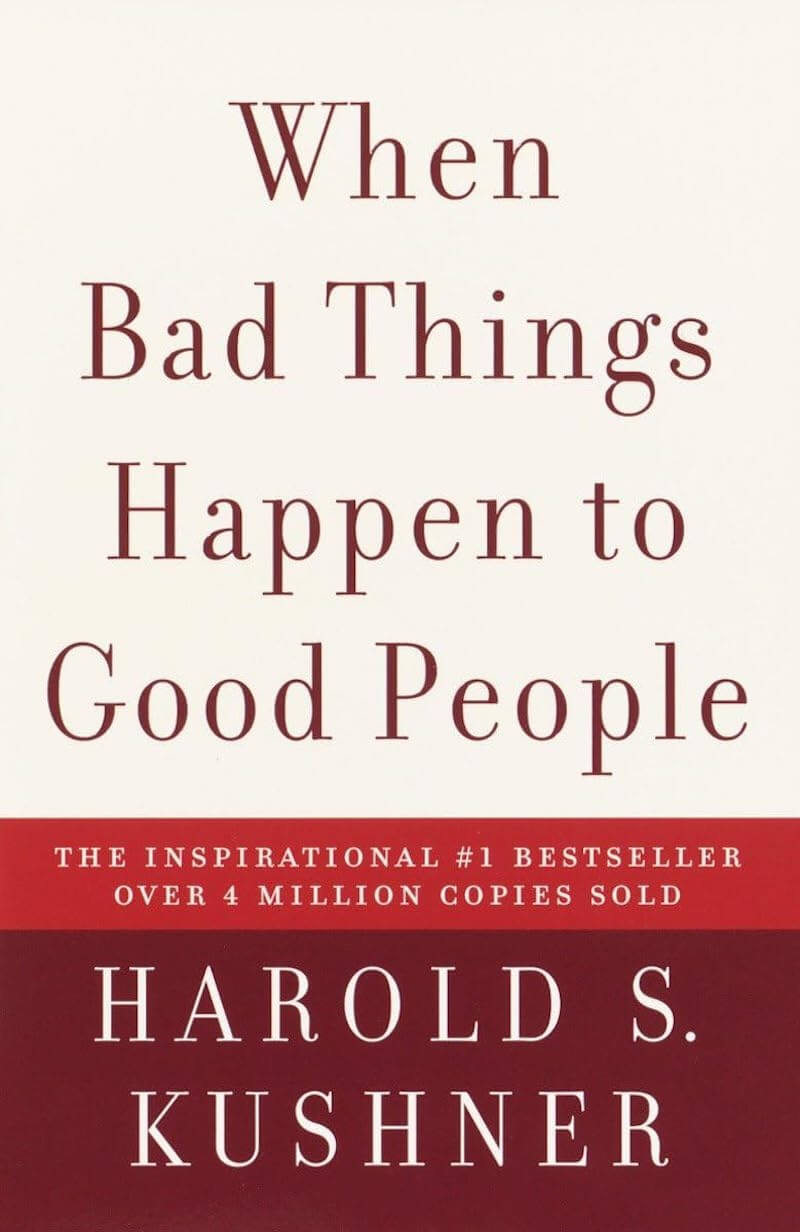
General Overview
The book is 300 pages long. It is entirely and fully made of text and contains no other type of material. It’s easy and quick to read. There is an audiobook version.
Brief Summary
Introduction
Why I wrote this book. Kushner talks about the illness and early death of his son, which forced him to rethink faith and human suffering. It was this personal tragedy that compelled him to look for answers to the question of how to live on and where to find hope.
Chapter One
Why are the righteous suffering? The author tackles the traditional question of religion: how can good people suffer? He shows that classic explanations such as “God punishes” or “God tests” often turn out cruel and do not match reality.
Chapter Two
The story of a man named Job. Kushner unpacks the biblical Book of Job and shows that its purpose is not to explain suffering, but to underscore the limits of human understanding. He also points out that Job’s friends, who blame him for sins, exemplify how one should not console the afflicted.
Chapter Three
Sometimes there is no cause. Here the author asserts that many woes happen not because of God’s will but by chance or due to the imperfection of the world. Realizing the lack of a “hidden plan” helps a person stop hunting for culprits and begin healing.
Chapter Four
No exceptions for good people. Kushner says that virtue does not protect against hardship and that the world is not governed by a reward‑penalty mechanism. He suggests accepting this fact without destroying faith in good.
Chapter Five
God leaves us the possibility to be human. The author explains that God created the world so that humans have freedom and can choose good. Chance and suffering are part of a world where responsibility, growth, and moral maturity are possible.
Chapter Six
God helps those who stop harming themselves. Kushner shows that part of the suffering comes from our own reactions—self‑blame, shame, anger. God helps a person when they cease to immortalize pain and begin to live, healing through acceptance and support.
Chapter Seven
God cannot do everything, but He can do some important things. The author puts forward a central idea: God does not send suffering or control randomness, but can give people strength, love, and courage to endure hard times. God is present not in misfortune, but in help and compassion.
Chapter Eight
So what’s good about religion then? Kushner explains that religion is valuable not because of promises of miracles or protection from evil, but because it gives people community, meaning, and moral support. Religion helps one survive pain, recover, and find the strength to keep living.
Opinion
My first encounter with the book was purely based on its title, as I had come across a mention of it in another book earlier. Since I’m always looking at things from physics, astronomy, and other exact sciences that collectively reject religion, it was difficult for me to read this book. The author tries to explain why our planet experiences such chaos and whether it should (and especially if it should) be affected by God. According to his theory, God is benevolent but not omnipotent, so he cannot prevent evil.
