
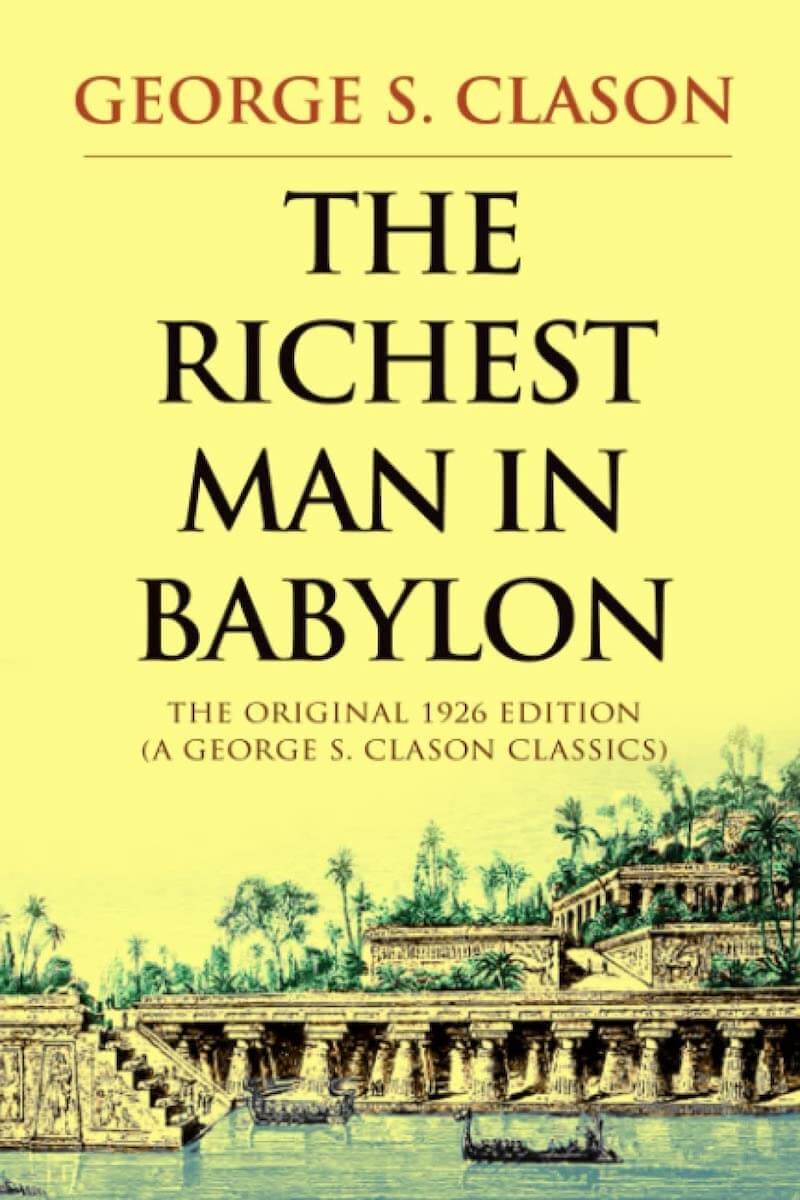
Overview
The book is 140 pages long (variations exist across editions and formats). The material is purely textual. The difficulty level is easy.
Brief description
A person who sought wealth
The main character realizes that he's worked all his life yet never got rich. His money barely covers living expenses. He turns to his old friend Arkaad — the richest man in Babylon — to hear how he managed to become wealthy.
The richest man in Babylon
Arkaad explains how he was once a simple clerk, but realized he wanted a rich life. He began saving part of his income and learning from wise people how to manage money.
Seven ways to fill your wallet
He outlines the seven rules of wealth:
- Save at least 10 % of your income.
- Control your expenses.
- Let the money work for you.
- Protect your capital from loss.
- Make your home your fortress.
- Secure the future.
- Improve your skills and knowledge.
Meeting the god of wealth
Arkaad tells that luck favors the prepared. Luck is not random — it comes to those who act swiftly when opportunity arises. Sluggishness and fear are enemies of wealth.
Five laws of gold
Arkaad sets out the laws governing money (some of which are listed above):
- Gold goes to those who save part of their income.
- It works for the benefit of its owner.
- It requires reasonable management.
- It leaves those who invest in unproven ventures.
- It disappears from those who heed the advice of incompetent advisors.
These principles are still relevant for modern investors.
Bibilonian usurer and camel trader from Babylon
These chapters describe the inhabitants and how the “business” was built in Babylon following the method described above.
Clay tablets from Babylon
Modern archaeologists find tablets with stories confirming the ancient wisdom of money laws. The idea is that principles of wealth management are eternal and work regardless of the era. Financial discipline never goes out of date.
Opinion
It’s probably one of the best books I’ve read about money and financial well‑being. Topics such as saving money, budgeting, investing and even promissory notes and pawn loans are touched on. All of this is illustrated in an easily understandable language through examples of ancient tales and stories.
