
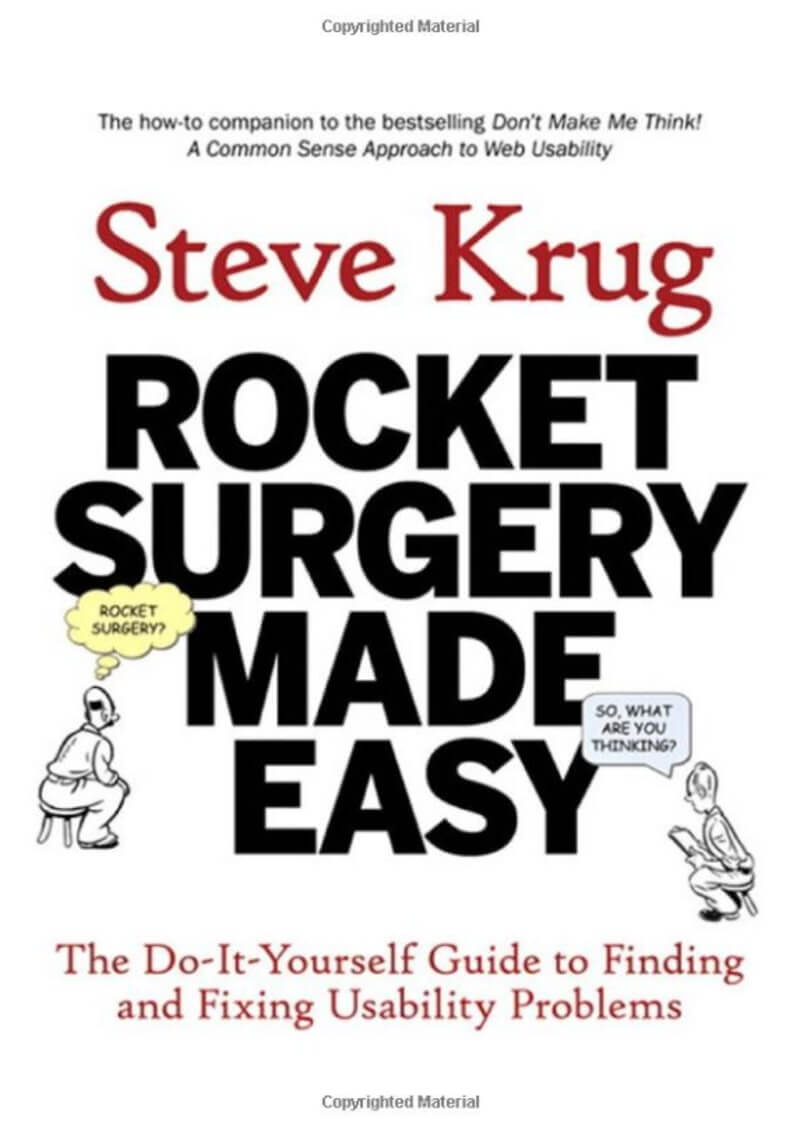
General Description
A small book of 141 pages. It consists of 16 chapters. Contains a lot of graphic material. Easy and quick to read.
Brief Description
The book begins with a description of the purpose of testing, as well as the problems that arise during testing and the goals pursued. The author shows that the most effective testing occurs when testing on real users, that is, people. To this end, the author describes testing with the invitation of real people. And for this, he tries to detail all the stages that make up this type of testing.
First, you need to find people, but not completely random ones, but average users of your product. Next, the author shows how to choose tasks for testing and what tasks to include in the test. Great attention is paid to the so-called hidden testing room - a place where people will be observing the behavior and actions of the user on the site. Various representatives can be included in such a room - from a designer and developer to a manager. By the way, the composition of such a "team" is also described in the book.
Considerable attention is given to the facilitator, that is, the person who works with the testing participants. The success of the test depends on this person, as it is he who will guide the tester, ask various questions, give or not give hints, and, of course, monitor the intentions and behavior of the tester.
After testing, it is very important to analyze and correctly interpret all the results. Based on these tests, changes can be made to the design or system behavior to facilitate interaction with the interface.
Opinion
A decent book about manual website testing. Great emphasis is placed on testing with invited random users, that is, the so-called "problematic interview". Well described is how to organize a room for this, who should be on the committee, how to behave during testing and other key points. Also very interestingly described is the comparison of debugging and redesign and explained why you should not do a redesign.
