
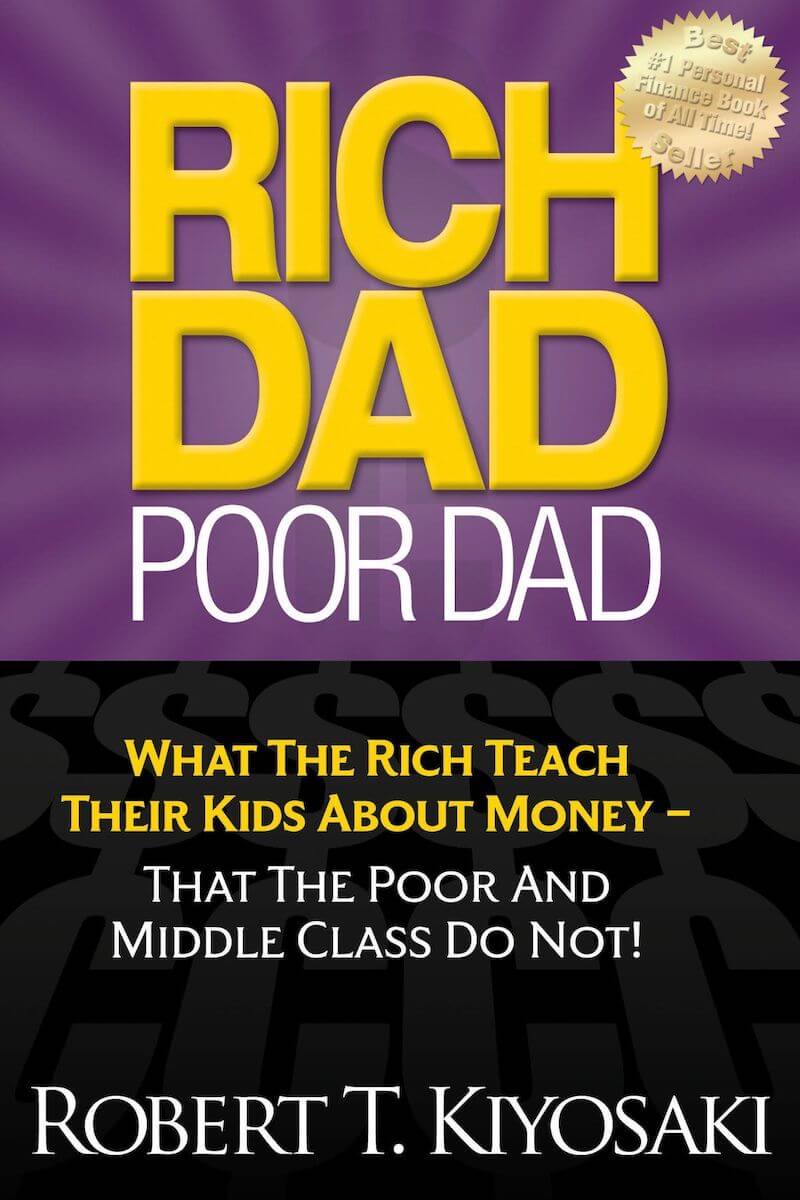
Overall Description
The book is about 200 pages long (the number of pages can differ significantly across editions and formats). It is easy and quick to read.
Brief Description
The author grew up in a regular, modest family, yet he had a friend whose father was a successful businessman. Kiyosaki grew up under the influence and influence of two fathers: «poor» and «rich». As he matured, each gave his own advice on life and financial dealings. Their advice diverged sharply. The chapters in this book cover the following:
Chapter One. The Wealthy Don’t Work for Money
The central idea is that the wealthy learn to make money with their tools, rather than sell their time. They seek opportunities, not salaries.
Chapter Two. Lesson 2: Why Financial Literacy Is Needed
Financial literacy enables one to distinguish assets from liabilities and build sustainable wealth. The middle class often errs, believing income is directly tied to employment.
Chapter Three. Lesson 3: Run Your Own Business
Kiyosaki advises creating income sources independent of work, such as a business or investments. This is the path to financial freedom.
Chapter Four. Lesson 4: The Income Tax Story and Corporate Opportunities
The book explains how laws and taxes work against ordinary people, and how the wealthy use corporations to protect and multiply capital.
Chapter Five. Lesson 5: The Wealthy Invent Money
The rich create opportunities and money using knowledge, networks, and investment, rather than relying solely on wages.
Chapter Six. Lesson 6: Work Not for Money, but for Experience
It is important to acquire knowledge, skills, and experience that over time bring financial opportunities, not just a paycheck.
Chapter Seven. Overcoming Obstacles
Fear, pessimism, laziness, bad habits, and arrogance hinder financial success. Kiyosaki explains how to overcome them.
Chapter Eight. How to Start
A step‑by‑step action plan is provided for those who want to improve their financial situation, beginning with simple steps and habits.
Chapter Nine. Still Not Enough? Here Are the Priorities
Concrete actions and ideas are offered to expand financial knowledge and increase income.
Concluding Thoughts
It underscores that the road to wealth is continuous learning, action, and application of knowledge.
Opinion
The book’s content remains vivid in memory even years after reading, indicating that the author presented material engagingly and structured the book well. Overall, the book contrasts the vastly different advice of the narrator’s own father and the friend’s father, whom the main character spent much time with. I definitely recommend it.
