
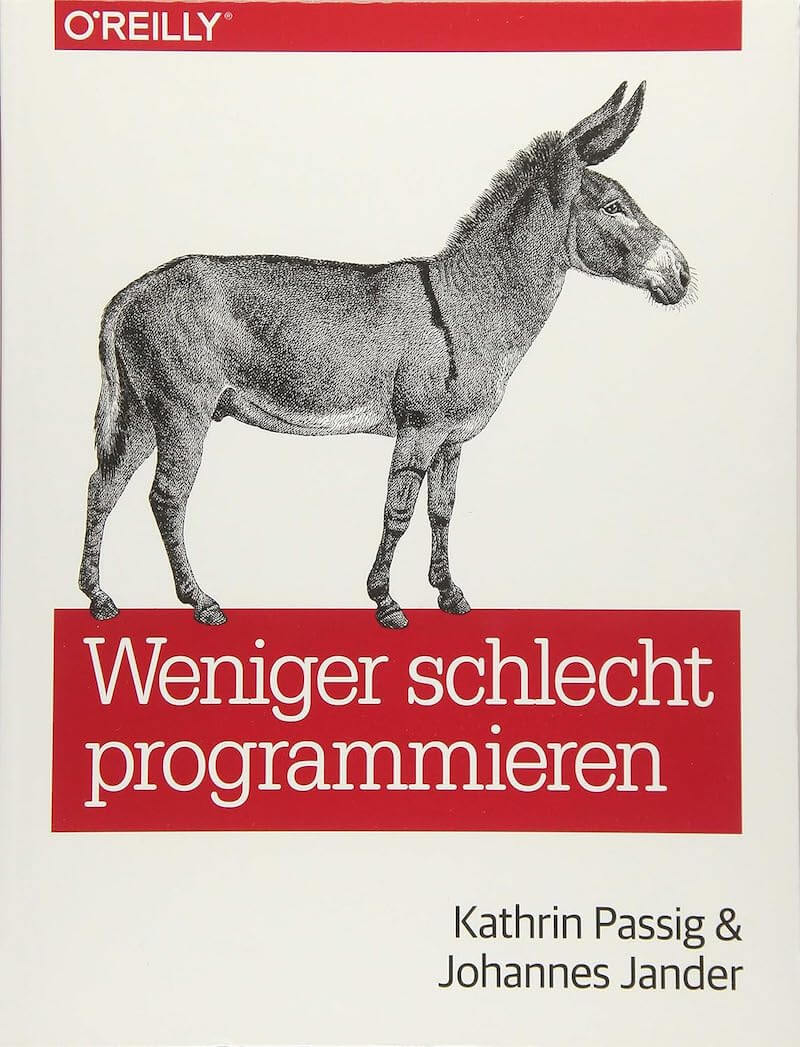
Overall Description
The book is just over 400 pages long. It is divided into four parts, which together contain 27 chapters. The material is presented mostly as text, though code snippets and illustrations appear from time to time. The book is easy to read, though not particularly quick because the font is not the largest.
Brief Description
Since there are so many chapters, I will not give a review of each one; instead I’ll focus on a concise overview of the book’s sections.
Part I. Hello, Myth! Hello, World!
This section serves as a gentle introduction to the world of programming and computer science. It consists of just two chapters, and there is no particular specificity here. The main aim of this section is to motivate the reader and foster the right attitude toward the programming process.
Part II. Programming and Understanding
The second part of the book is devoted to the fundamentals of coding itself and serves as a “starter kit” for developers. Here the basic syntactic constructs that form the basis of most programming languages are examined in detail: variables, data types, operators, comments. Conditional constructs (if/else) and loops (for/while) are dissected. The analysis is not from the point of view of “what they are” (this information can be easily found elsewhere), but rather from the standpoint of correct usage: how to name variables so they’re easier to read and still follow the project or language’s standards, when to use comments, and so forth. This section lays the groundwork for practical skills and is key to understanding how working programs are built.
Part III. Fixing Errors
From the separate local miniprojecs and tips covered in the second part, the author moves on to building larger and more complex systems, culminating in the search and correction of errors within them. Refactoring, debugging, and testing are the main topics of this section.
Part IV. Choosing Tools
The final section of the book is devoted to further development and prospects in programming. The authors introduce object‑oriented programming (OOP), explaining classes and objects that allow the real world to be modeled in code. Topics such as web development, databases, version control, and security are also touched upon, indicating where the acquired knowledge will be useful in a professional setting. This section serves as a sort‑of general roadmap.
Opinion
Another almost‑programming book that describes how to write code, name variables, and so on. I’ve already read roughly five of these kinds of books, so it’s hard to label it as truly informational. Nevertheless, for such purposes this book can be quite interesting and valuable, especially if it’s the first of its kind that you’ve decided to read.
