
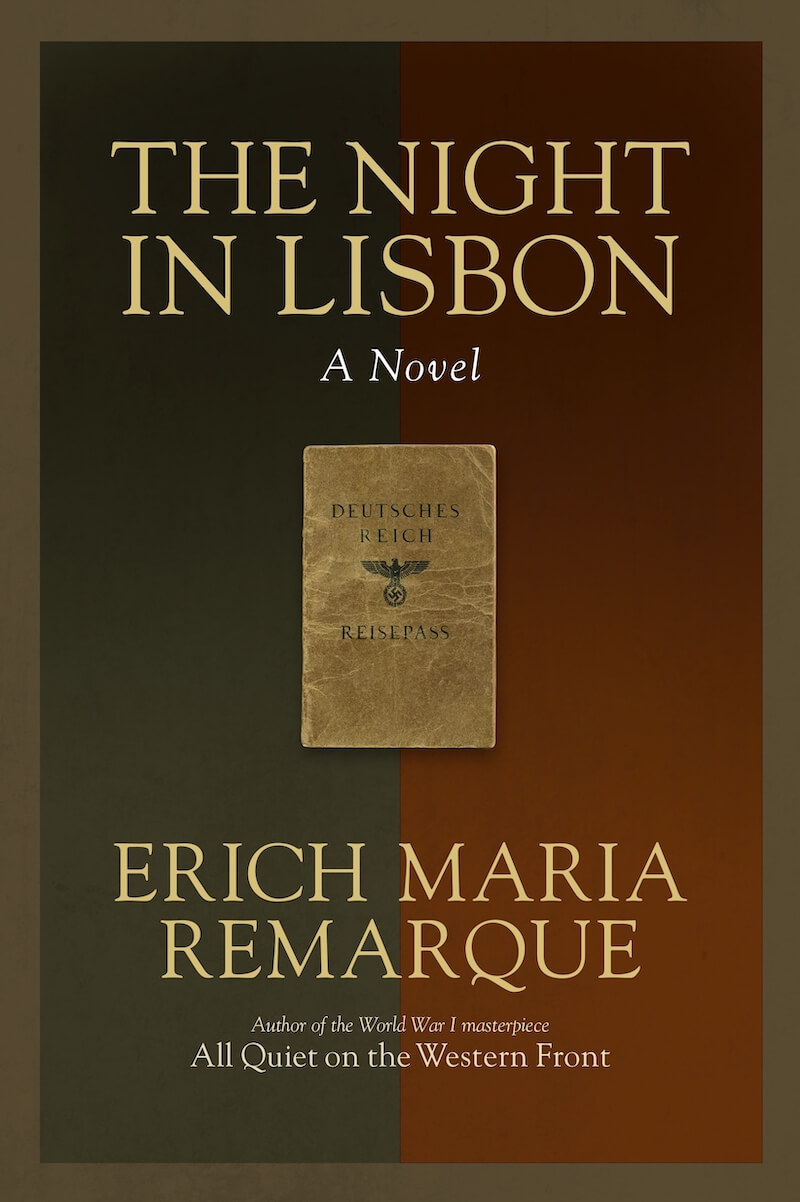
Genres: Novel, Foreign Classics, World War II
Year of publication: 1961
Year of reading: 2022
Good
Number of reads: 1
Total pages: 399
Summary (pages): 3
Original language of publication:
German
Translations to other languages: Russian, English, Spanish, Portuguese, Chinese
General Description
Text‑only book, no illustrations. Readable quite easily. There is also an audio version.
Brief Overview
Attention: spoilers below.
- In 1942 in Lisbon the main character – a refugee, penniless, visa‑less – looks at a ship bound for America; for him it is a chance for salvation.
- He is about to lose his last hope: he loses money and cannot afford a ticket.
- Then he meets a strange immigrant who introduces himself as Joseph Schwarz, who offers two tickets – on the condition that the hero spends the night listening to his story.
- Night of tales begins: Schwarz tells of his former life, before the rise of Nazism – normal domestic and emotional rhythms, before war.
- Then – when the Nazis came to power – Schwarz was forced to flee Germany; he lost his home, citizenship, and past life.
- He squeezes through Europe, hiding, using forged documents – a refugee’s life, full of fear, flight, uncertainty.
- At some point Schwarz voluntarily or involuntarily returns to Germany – to try to find his wife, Elena. A risky move, almost self‑sacrifice.
- He succeeds in meeting her, but danger remains – they are hunted by a Nazi relative, Georg Jürgen, who presents Schwarz to the authorities.
- Schwarz and Elena are forced to run again – now together, through France, Spain, with false passports.
- Along the way – internment camps, horrible conditions, fear, hunger, humiliation; they are constantly at risk of being caught.
- Between escape attempts, arrests and breakthroughs – correspondence with Elena, rare letters, hope of a reunion, pain of separation.
- After many trials they reach a circle of friendly emigrants – receive forged documents, visas for the USA; a chance for salvation appears.
- But Georg finds them again; pursuit, escape, struggle – final confrontation. Schwarz kills Georg, takes his passport and documents.
- With Georg’s passport they (Schwarz, Elena and the refugee – the boy‑refugee they saved) cross the Spanish border, reach Lisbon.
- In Lisbon Schwarz buys tickets for a liner to America; they finally have a chance to evacuate.
- But Elena grows worse – she is suffering from a serious illness (cancer). This makes the escape more tragic.
- On the eve of departure Elena commits suicide – under the pressure of illness and despair. Shocked, Schwarz decides not to abandon the resistance: he gives his documents and tickets to the narrator, so that he can go to America.
- The narrator (the refugee hero) departs for America with his wife; Schwarz stays behind with the intent to join the foreign legion and fight Nazism. His story – an attempt to preserve the memory of Elena and what many refugees experienced.
Opinion
Because this is a novel, and I usually don’t read novels, I would not have reached this book on my own. We went through it at work in a reader’s group, so it was necessary to read it. Overall the book is good, with moments that still remain relevant today.
