
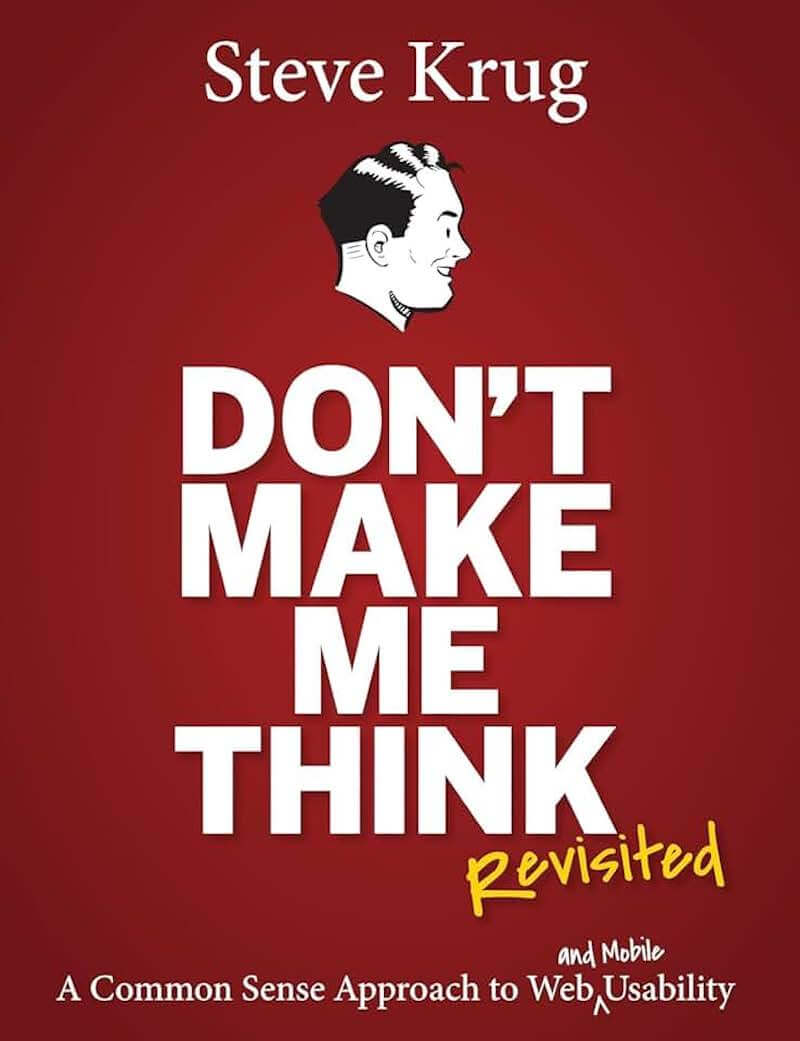
Genres: Information Systems (IT), Web Design
Year of publication: 2017
Year of reading: 2021
Normal
Number of reads: 1
Total pages: 252
Summary (pages): 6
Original language of publication:
English
Translations to other languages: Russian, Spanish, Portuguese, Chinese
General Description
A book of 250 pages, consisting of 13 chapters. Contains a lot of graphical material. Reading difficulty level - easy.
Short Description
A list of chapters with brief descriptions, taken directly from the book, is presented below:
- Chapter 1. Don't Make Me Think. (Krug's First Law of Usability)
- Chapter 2. How We Really Use the Web. (Scanning, "satisficing," and using "as needed")
- Chapter 3. Billboard Basics. (Design is for scanning, not reading)
- Chapter 4. Animal, Vegetable, or Mineral? (Why users like choices that don't require thinking)
- Chapter 5. Omit Words. (The art of web conciseness)
- Chapter 6. Road Signs and Breadcrumbs. (Designing navigation)
- Chapter 7. The Big Bang Theory for Web Design. (The importance of getting started on the right foot)
- Chapter 8. "The farmer and the shepherd must be friends." (Why most usability arguments are a waste of time, and how to avoid them)
- Chapter 9. Usability Testing for Five Rubles a Day. (Make testing simple - that will be enough)
- Chapter 10. Mobile - it's not just a city in Alabama anymore. (Welcome to the 21st century - you may feel a slight dizziness)
- Chapter 11. Usability as a Matter of Good Taste. (Why your website should be human)
- Chapter 12. Accessibility - and you. (Just when you think you're done, a cat with a sandwich attached to its back rushes by)
- Chapter 13. A Guide for the Perplexed. (Implement usability where you live)
Opinion
If I were asked to describe this book in just a few words or phrases, I would choose the following: banality, SEO-optimization cut, usefulness, testing. Despite its banality, this book can be very useful for beginning testers and even become a desktop book for PMs. As I said, some concepts don't work well with SEO, but if it's not important to you, you can safely apply many of the practices and advice from the book.
