
At the beginning of this year, I published an article, why drivers dislike winter. Continuing on this theme, I decided to write another one.
In driving schools, in addition to studying traffic rules and practicing driving, the instructors often share their unwritten rules, life experiences, and some advice. Perhaps this isn't the case everywhere, but it was certainly true for me. I wouldn’t say these tips were particularly new or surprising. Most of the time, they were quite basic, although they might have been valuable advice for older drivers.
Below, I have gathered a few pieces of advice that I have never heard in driving school or from friends/acquaintances. There will be no obvious tips, such as “left turns are the most dangerous, so be careful” or “overtaking is the most dangerous maneuver on the road, and you should think seven times, ensuring its safety and necessity.” So, here we go:
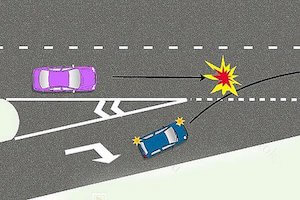 Entrances and Exits to Bridges Are Just as Dangerous as Left Turns: Look around and yield to traffic when entering a bridge, and avoid crashing into the vehicle in front of you that suddenly stops. Also, don’t rush to enter too early; wait until all the traffic has passed (for example, wait for the entire long bus to clear).
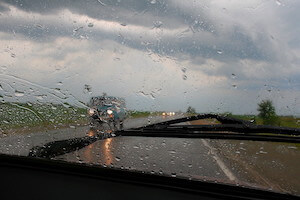 The most dangerous maneuver is driving on single-lane roads outside the city. Always use your high beams. Some drivers may have vision problems, or the color of your car may blend in with the asphalt in sunny weather, making it difficult to see, or it might not be visible on cloudy and rainy days. A driver might attempt to overtake without seeing your vehicle. Therefore, it’s important to clearly signal your presence from a distance. It is even safer to drive in a convoy of cars, but not as the lead vehicle.
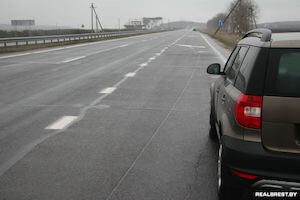 If you decide to stop at a turn in some remote village outside the city, I see nothing wrong with that. However, there is one nuance: always do this in the acceleration lane, not in the deceleration lane (of course, as close to the shoulder as possible). For someone behind you who wants to make a proper turn by switching to the deceleration lane, you can create a significant obstruction, as the car behind is traveling at high speed and may not always be able to stop in time. If you are stopped in the acceleration lane, the situation is somewhat easier: you are simply obstructing a vehicle that is at almost zero speed, rather than one traveling at 90-120 km/h.
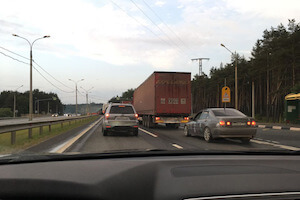 I have encountered situations where drivers, approaching a stationary traffic jam on highways or ring roads at high speeds, turn on their hazard lights to attract attention. It’s not a bad solution, although I have never resorted to using it myself.
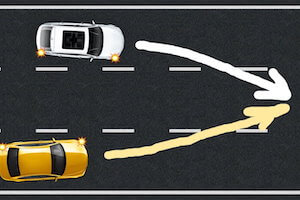 If you are driving in a three-lane road, let’s say in the far right lane, and someone is driving in the far left lane opposite you, and you need to change to the center lane, do not rush to do so. At the same time, another vehicle may also want to make the same maneuver. As a result, you could collide in the center lane.
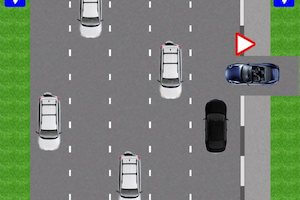 If you are exiting from a parking lot or a turn where there is no acceleration lane and you cannot see whether any cars are coming, and you are forced to pull out onto the first lane to check for traffic, but you realize that you cannot make it out due to a dense flow of vehicles, including those in the first lane where you have already partially moved your vehicle, then if possible, engage reverse gear and completely remove your bumper and hood from the road to avoid obstructing other cars.
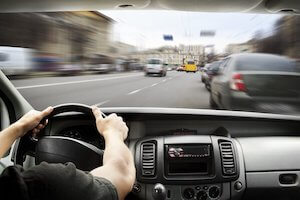 Everyone says that you should never drive under the influence of alcohol, but few emphasize the dangers of fatigue. Due to exhaustion, even in ordinary driving situations where automatic responses would typically kick in, we may hesitate. Therefore, if you are very tired or haven’t had enough sleep, it’s better to use public transportation.
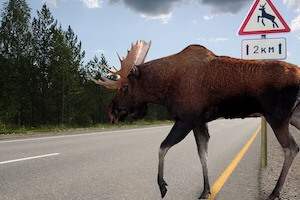 When driving outside the city, pay attention to wildlife signs. This applies to both daylight and nighttime driving. If there are multiple lanes in each direction, try to drive in the second lane closer to the center of the road, even if this contradicts my next piece of advice. This way, you will have a little more time to react to any animals that suddenly appear.
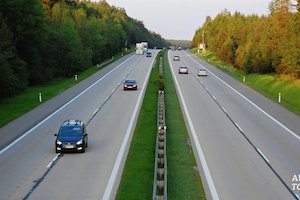 Now, this next piece of advice might be considered rather obvious. Do not drive in the second lane without necessity, as it is meant for overtaking, not for continuous travel. So, don’t be surprised if other drivers honk and flash their headlights at you, even if there is a second lane available to your right.
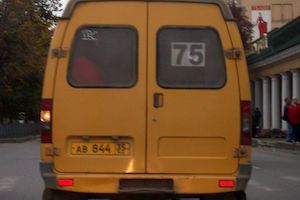 While the advice about maintaining a safe following distance behind the car in front of you may seem trivial and is commonly suggested, I will elaborate further on this point. When choosing your following distance (especially on rural roads or at least on highways where traffic is dense and speeds exceed 80 km/h), try to follow a passenger car, such as a sedan, hatchback, or station wagon, so that you can not only see it but also a few cars behind it. This way, you can react more quickly not only to the braking of the car directly in front of you but also to the other cars in your lane, as long as the height of the car in front allows you to see them. Therefore, if you are unsure of your ability to brake suddenly, avoid following vans, SUVs, and other tall vehicles that completely obstruct your view of the lane ahead.
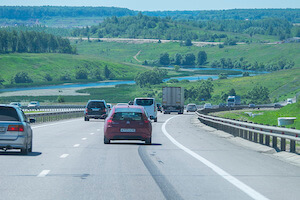 Imagine you are driving outside the city on a two-lane highway (one lane in each direction) in the second lane. You are approaching two vehicles traveling in the first lane, and you notice that the second vehicle has activated its left turn signal to indicate an intention to overtake. What are you going to do: accelerate to pass both vehicles quickly, or slow down to allow the car to complete its overtaking maneuver? Your actions will likely depend on the intentions of the driver of the vehicle that has signaled. If they do not begin to overtake within a couple of seconds, they are probably yielding to you. Do not be like those drivers who signal their intention to change lanes far too early. Avoid misleading other drivers; allow them to pass you first, and only then activate your turn signal and proceed with your overtaking maneuver.
It is likely that this article will be periodically updated with new points.
